The Science Behind Psilocybin Mushrooms: Unlocking Nature’s Potential
Psilocybin mushrooms are fungi that contain psilocybin, a naturally occurring psychedelic compound that the body converts to psilocin, which interacts with the brain’s serotonin system.
Psilocybin mushrooms, often referred to as magic mushrooms, have been used for centuries in spiritual and therapeutic practices. These fascinating fungi are garnering renewed attention from the scientific community for their profound effects on the brain and their potential to revolutionize mental health treatment. But what exactly makes these mushrooms so remarkable? Let’s explore the science behind psilocybin mushrooms, from their biological makeup to their transformative effects on the mind.
What is Psilocybin?
Psilocybin is a naturally occurring compound found in certain mushroom species. When ingested, psilocybin is converted by the body into psilocin, which is the compound primarily associated with changes in perception and cognition. In scientific discussions, psilocybin is often described as a “classic psychedelic” because of how it interacts with serotonin signaling pathways in the brain.
Researchers study psilocybin not only because of subjective experience, but also because it provides a window into how the brain organizes thought, mood, attention, and patterns of meaning-making. This makes it relevant in neuroscience and psychology research, where scientists explore how shifts in brain network activity may relate to perception, emotion, and long-term learning.
Psilocybin vs. Psilocin: What’s the Difference?
Psilocybin and psilocin are closely related, but they are not the same compound. Psilocybin is considered a “prodrug,” meaning it becomes active after the body converts it into psilocin. Psilocin is the form that more directly interacts with certain serotonin receptors involved in brain signaling.
This distinction matters in science writing because it clarifies why many articles mention both compounds: psilocybin is the compound present in mushrooms, while psilocin is the form most often discussed in relation to brain effects and receptor activity.
Where Psilocybin Occurs in Nature
Psilocybin occurs in a range of mushroom species commonly grouped as “psilocybin mushrooms.” These mushrooms vary in appearance, habitat, and growth characteristics, and they are often categorized by genus/species in scientific contexts and by strain names in community discussions.
For educational purposes, it’s helpful to understand that “psilocybin mushrooms” is a broad category rather than a single type. Different varieties are frequently discussed because they may differ in cultivation traits and commonly reported potency ranges (though potency can vary for many reasons).
Why People Study Psilocybin Today
Modern interest in psilocybin research includes several areas of investigation:
- Neuroscience: how brain networks communicate and reorganize under altered states
- Psychology: how changes in attention, emotion, and cognition can be measured and described
- Therapeutic research (carefully framed): how controlled settings may influence outcomes in clinical studies
- Consciousness studies: how perception and the sense of self relate to brain activity
It’s important to note that research findings depend on context, study design, and participant factors, and scientific understanding continues to evolve. A strong science page doesn’t overpromise outcomes—it explains what is known, what is being explored, and where uncertainty remains.
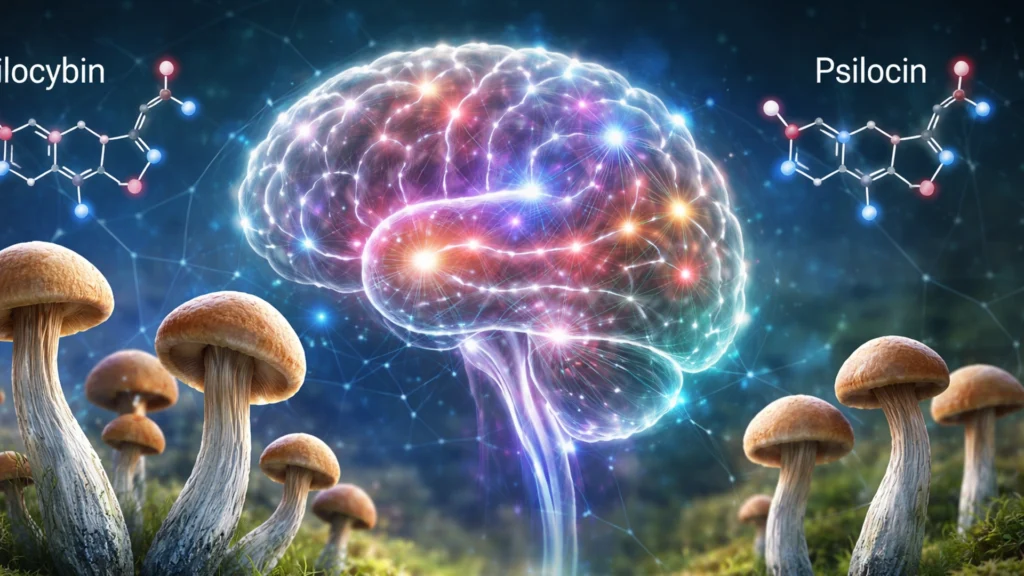
How Psilocybin Interacts With the Brain
Psilocybin is primarily studied for how it influences communication between different parts of the brain. After psilocybin is converted into psilocin in the body, it interacts with specific serotonin receptors that play a role in mood, perception, and cognition. This interaction does not simply “turn on” or “turn off” parts of the brain, but instead appears to change how different brain regions communicate with one another.
Modern brain imaging techniques have allowed researchers to observe these changes in activity and connectivity, offering insight into why experiences and perception may feel different under altered states. Much of the scientific interest in psilocybin centers on how it affects large-scale brain networks rather than just isolated regions.
Serotonin Receptors and Signaling
Psilocin, the active form of psilocybin, is known to interact primarily with serotonin receptors, especially a subtype often referred to in research as the 5-HT2A receptor. Serotonin is a neurotransmitter involved in many functions, including mood regulation, perception, and cognition.
When psilocin binds to these receptors, it appears to alter normal patterns of signaling in the brain. Rather than simply increasing or decreasing activity, this interaction can change how information is processed and shared across different regions. This is one reason researchers describe psilocybin’s effects in terms of altered communication and integration within the brain, rather than as a simple stimulant or depressant.
Brain Networks and the “Default Mode Network” (DMN)
One brain system that is frequently discussed in psilocybin research is the “default mode network,” or DMN. This network is associated with functions such as self-referential thinking, daydreaming, memory, and the ongoing narrative people maintain about themselves and their experiences.
Studies suggest that psilocybin can temporarily reduce or reorganize activity within this network. When this happens, other brain networks may communicate more freely with one another, leading researchers to describe the brain as becoming more “globally connected” during these states. From a scientific perspective, this change in network dynamics helps explain why perception, attention, and thought patterns may be experienced differently.
Connectivity, Perception, and Cognition
Another major area of research focuses on how psilocybin affects overall brain connectivity. Under typical conditions, certain brain regions communicate more strongly within their own networks and less with others. Research suggests that psilocybin can temporarily change these patterns, allowing for increased cross-communication between areas that do not usually interact as closely.
Scientists study these changes because they provide insight into how the brain constructs perception, meaning, and cognitive frameworks. While the subjective experience can vary widely from person to person, the underlying scientific interest is in how flexible or rigid brain network patterns influence thought, emotion, and learning.
Neuroplasticity and Learning
Neuroplasticity is a term used to describe the brain’s ability to change and adapt over time. This includes forming new connections, strengthening existing ones, and reorganizing networks in response to experience, learning, and environment. Neuroplasticity is a normal and ongoing process that plays a role in everything from skill development to memory and emotional processing.
In recent years, scientists have become increasingly interested in how different states of consciousness may relate to neuroplasticity. Psilocybin is one of several compounds being studied in this context, not because it directly “teaches” the brain anything, but because it appears to temporarily change how flexible or rigid certain brain networks are.
What Neuroplasticity Means
In simple terms, neuroplasticity refers to the brain’s capacity to adapt. When people learn something new, practice a skill, or form new habits, the brain changes at a structural and functional level. These changes can involve the creation of new neural pathways or the strengthening and weakening of existing ones.
This adaptability is essential for learning and for adjusting to new experiences. It also explains why the brain is not a fixed or static system, but rather a dynamic network that is constantly being shaped by experience and environment.
What Research Is Exploring About Psilocybin and Neuroplasticity
Some scientific studies are exploring whether psilocybin is associated with changes in markers related to neural growth and connectivity. Researchers are particularly interested in how altered patterns of brain communication, observed during and after certain states, may relate to the brain’s ability to reorganize and form new connections.
From a research perspective, the focus is not just on short-term changes, but on how shifts in brain network flexibility might influence learning, perception, and patterns of thought over time. This area of study is still developing, and findings continue to be refined as more data becomes available.
What’s Still Unknown
While there is growing interest in the relationship between psilocybin and neuroplasticity, many questions remain open. Scientists are still working to understand:
- How long any observed changes may last
- How individual differences affect outcomes
- How context, environment, and study design influence results
Because of these uncertainties, responsible scientific writing emphasizes that research in this area is ongoing and that conclusions should be viewed as part of a developing field rather than as settled facts.
What Research Says About Potential Effects
Scientific interest in psilocybin includes studying how it may influence mood, perception, and patterns of thinking in controlled research settings. Rather than focusing on guarantees or outcomes, researchers examine how changes in brain activity and connectivity correspond with reported experiences and measurable psychological variables.
It is important to understand that this area of study is still evolving. Findings depend on study design, participant selection, dosage, environment, and many other factors. For this reason, responsible scientific discussion emphasizes trends, observations, and open questions rather than definitive conclusions.
Mood and Emotional Processing (Research Context)
Some studies explore how psilocybin relates to mood and emotional processing in structured, supervised environments. Researchers are interested in how changes in brain network activity may correspond with shifts in emotional perspective, attention, or cognitive flexibility.
From a scientific standpoint, the focus is on understanding mechanisms and patterns rather than making claims about treatment or outcomes. Different individuals can respond in very different ways, and results observed in research settings do not automatically generalize to all contexts or all people.
Anxiety, Trauma, and Addiction (Emerging Research Areas)
In addition to mood-related research, scientists are also exploring how psilocybin may relate to conditions such as anxiety, trauma, and addictive behaviors within clinical research frameworks. These studies aim to better understand how altered patterns of brain communication might influence rigid or repetitive thought and behavior patterns.
It is important to note that this work is conducted under carefully controlled conditions and is still subject to ongoing review and refinement. The purpose of this research is to build understanding, not to promote unsupervised or generalized use.
Limitations of Current Studies
Like many emerging areas of science, psilocybin research has limitations. These can include:
- Small sample sizes
- Highly controlled environments that differ from real-world settings
- Short or medium-term observation windows
Because of these factors, scientists continue to stress the need for more data, broader studies, and long-term follow-up before drawing strong conclusions. This cautious approach is a normal and healthy part of scientific progress.
Historical and Cultural Context
Long before modern scientific research began, psilocybin-containing mushrooms were used in various cultural and ceremonial contexts. Historical records, archaeological findings, and ethnographic studies suggest that certain Indigenous cultures incorporated these mushrooms into spiritual, healing, and ritual practices.
Understanding this background helps place modern scientific interest in a broader human context. Rather than being a recent discovery, psilocybin mushrooms have a long and complex history that spans geography, culture, and belief systems.
Traditional and Ceremonial Use
In parts of Mesoamerica and other regions, psilocybin-containing mushrooms were used in ceremonial settings for centuries. These practices were often connected to spiritual traditions, community rituals, and systems of meaning that viewed altered states of consciousness as a way to explore insight, guidance, or connection.
While many details of these traditions were lost or suppressed over time, historical and anthropological research has helped preserve knowledge about how these mushrooms were understood and respected within their cultural contexts. This history is frequently cited in modern discussions as an example of how human societies have long been interested in the relationship between consciousness, perception, and meaning.
Modern Research and Renewed Interest
In the mid-20th century, psilocybin became a subject of scientific study in Western research institutions, leading to early investigations into perception, cognition, and consciousness. After a long period of limited research, scientific interest has increased again in recent decades as new tools and methods have become available to study the brain.
Today, universities and research organizations around the world are exploring psilocybin within tightly controlled, ethical research frameworks. This renewed interest reflects broader questions about how the brain works, how perception is constructed, and how flexible or rigid patterns of thought and behavior may be understood.efits of psilocybin. Whether you’re curious about its science or looking to explore its potential, we’re here to support your journey into nature’s magic.
Safety, Responsibility, and Important Considerations
Any discussion of psilocybin mushrooms in a scientific or educational context should include careful attention to safety, legality, and personal responsibility. Laws and regulations surrounding psilocybin vary widely by location, and these legal differences play an important role in how research and public discussion are conducted.
In addition to legal considerations, individual health factors, personal circumstances, and environmental context all influence how experiences are perceived and interpreted. For this reason, responsible sources emphasize education, caution, and informed decision-making rather than assumptions or generalizations.
Individual Factors and Risk Awareness
People differ widely in their physical health, mental health, life experiences, and sensitivities. These differences mean that reactions and experiences can vary significantly from one person to another.
From an educational perspective, it is important to recognize that factors such as personal history, current health conditions, and psychological context can influence how someone responds to altered states of consciousness. This is why scientific and academic discussions stress the importance of careful screening, supervision, and context in research settings.
Legal Status Varies by Location
The legal status of psilocybin differs depending on country, state, and local jurisdiction. In some places, it is the subject of regulated research or specific legal frameworks, while in others it remains restricted or prohibited.
Because laws change and can be complex, anyone seeking information about legality should consult reliable, up-to-date local sources rather than relying on general statements. This page is intended to provide scientific and educational context, not legal guidance.
This Content Is Educational, Not Medical or Legal Advice
The information on this page is provided for educational and informational purposes only. It is not intended to diagnose, treat, cure, or prevent any condition, nor is it meant to replace professional medical or legal advice.
Anyone with health concerns, legal questions, or personal circumstances that require guidance should consult qualified professionals who can provide advice tailored to their situation.
FAQs
Psilocybin is a naturally occurring compound found in certain mushroom species. In the body, it is converted into psilocin, which interacts with brain systems involved in perception, mood, and cognition. Scientists study it to better understand how the brain organizes experience and meaning.
Psilocybin is the compound found in mushrooms, while psilocin is the form the body converts it into after ingestion. Psilocin is the compound that more directly interacts with certain serotonin receptors in the brain.
Research suggests that psilocybin changes how different brain networks communicate with each other, particularly systems involved in perception, self-referential thinking, and cognition. Scientists study these changes to better understand brain connectivity and information processing.
Yes. Universities and research institutions around the world are studying psilocybin in controlled, ethical research settings. This research focuses on neuroscience, psychology, and how the brain processes experience.
Current scientific literature generally does not classify psilocybin as physically addictive. However, research continues, and responsible scientific discussion emphasizes understanding both risks and limitations.
No. This page is intended for educational and informational purposes only and does not provide medical or legal advice. Anyone with health or legal questions should consult qualified professionals.
Are you Ready for your Experience?
-

B+ Mushrooms
Price range: $40.00 through $45.00 -
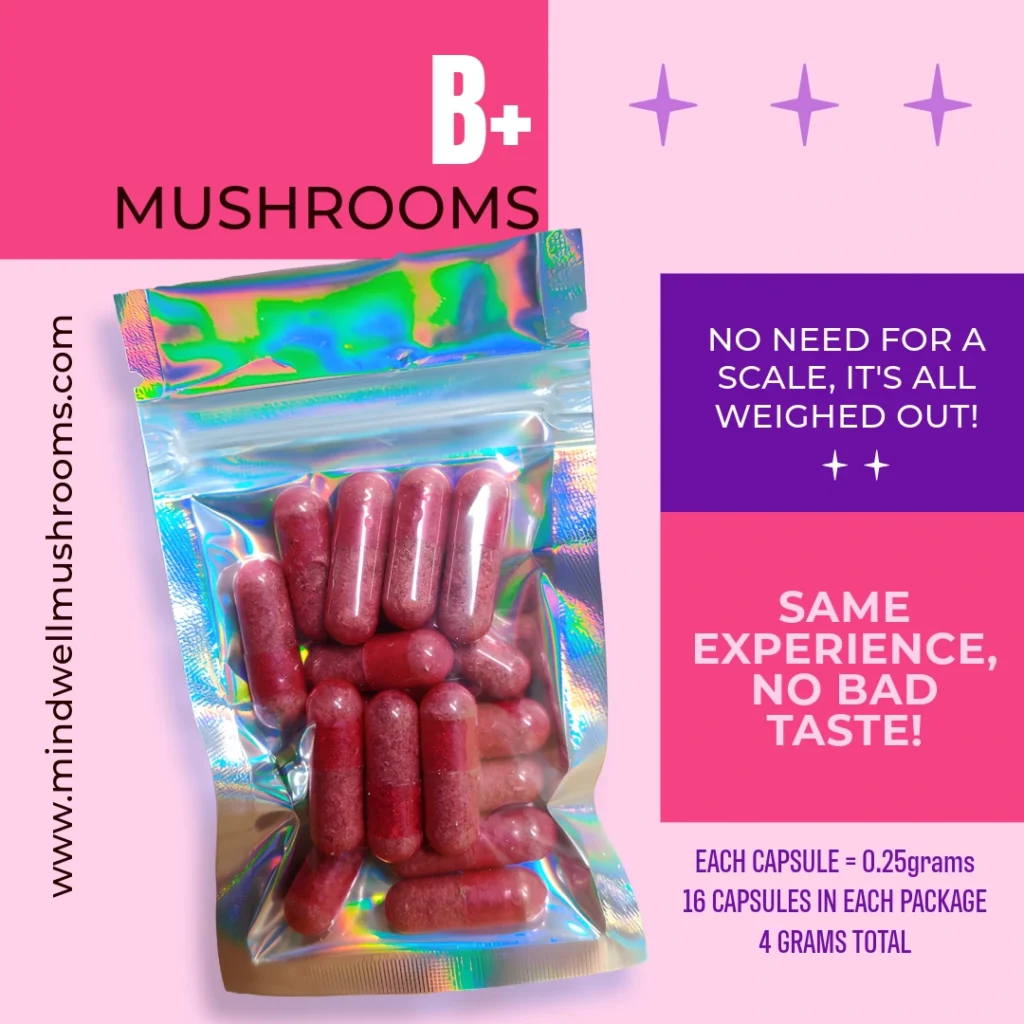
B+ Psilocybin Mushroom Capsules
$45.00 -

Blue Honey – 4 oz (Tidal Wave Psilocybin)
$75.00 -

Blue Meanie Mushrooms
Price range: $40.00 through $45.00 -

Blue Meanie Psilocybin Capsules
$45.00 -

Golden Teacher Mushrooms
$40.00 -

Jedi Mind Fuck Capsules
$45.00 -

Jedi Mind Fuck Mushrooms
$40.00 -
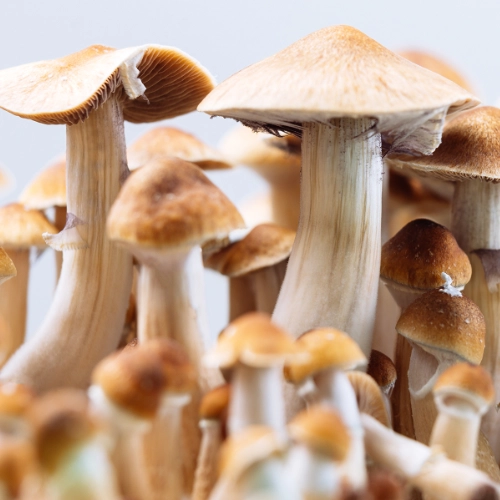
Thai Tanic Mushrooms
$40.00