by mindwell
Learn how long magic mushrooms last, how storage conditions affect shelf life, and how potency may change over time. This guide explains the factors that influence mushroom longevity and the best ways to store them properly.
[...]


 Thai Tanic Mushrooms
$40.00
Thai Tanic Mushrooms
$40.00 Jedi Mind Fuck Capsules
$45.00
Jedi Mind Fuck Capsules
$45.00 Blue Honey - 4 oz (Tidal Wave Psilocybin)
$75.00
Blue Honey - 4 oz (Tidal Wave Psilocybin)
$75.00 Powerful Psilocybin Mushroom Powder
$45.00
Powerful Psilocybin Mushroom Powder
$45.00 B+ Psilocybin Mushroom Capsules
$45.00
B+ Psilocybin Mushroom Capsules
$45.00
Learn how long magic mushrooms last, how storage conditions affect shelf life, and how potency may change over time. This guide explains the factors that influence mushroom longevity and the best ways to store them properly.
[...]

Psilocybin mushrooms come in many different types, each varying in potency, effects, and characteristics. This guide explains the most common psilocybin mushroom species and strains, how potency levels differ, and why experiences can vary from one type to another.
[...]
The Complete History of Magic Mushrooms
The human link to psilocybin is not new. This intimate partnership stretches back to prehistory. Tracing its lineage means consulting records written in stone. It also means studying preserved ceremonial practices.
Anthropologists found compelling evidence. Magic mushroom use dates back thousands of years. These clues appear in unexpected places.
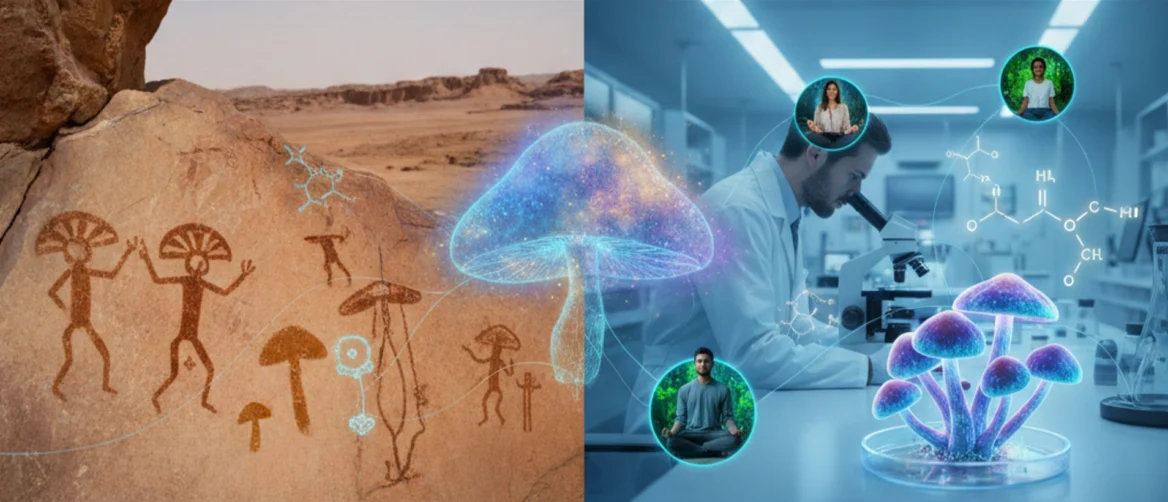
The most famous evidence comes from Tassili n’Ajjer. This is a plateau in the Sahara Desert, Algeria. Rock art from 7,000 to 9,000 years ago depicts the “Fungus Man.” Masked figures dance in this mural. Importantly, mushrooms sprout from one figure’s body. This scene suggests a shamanic ritual. The fungi’s details point to a Psilocybe species.
Similarly, we find Mesoamerican “mushroom stones.” They date back to 1000 B.C. These sculpted effigies have a stalk and cap. They were clearly used in ritual settings. Consequently, they symbolize ancient psychoactive fungi.
For early societies, these fungi were not recreational. They served as vital spiritual tools. They shaped cosmology and social structure.
The primary use was as a shamanic conduit. Shamans were spiritual leaders. They ingested mushrooms to induce an altered state. They sought guidance and prophecy. Furthermore, they diagnosed and cured illnesses.
These practices built the foundation for later traditions. The Aztecs called the fungi Teonanácatl. This translates to “flesh of the gods.” This name confirms the mushrooms’ divine status. They were a direct embodiment of the cosmos.
The deepest use of psilocybin is found in indigenous cultures. Here, the fungi are treated as a powerful sacrament. These traditions represent sophisticated, tested spiritual systems.
The history of psilocybin is linked to Mesoamerica. Ritual use there was highly formalized.
The Aztecs revered Teonanácatl. The name means “Flesh of the Gods.” Use was restricted to priests and shamans. They used the fungi for prophecy and healing. The Florentine Codex confirms this. It shows mushroom use in sacred Aztec contexts.
Following the Spanish conquest, Catholicism suppressed the practice. Friars viewed mushroom use as idolatry. They associated it with the Devil. Colonial authorities outlawed ceremonies. Therefore, the practices were forced underground.
The most intact lineage comes from the Mazatec people. They live in Oaxaca, Mexico.
The core practice is the velada. This is an all-night healing vigil. A curandera (healer) performs the ritual. The mushrooms are viewed as “wise children.” They are consumed in darkness and silence. The healer guides participants with chants.
María Sabina was a famous curandera. She exposed the traditions in the 1950s. This exposure unfortunately caused global attention. However, it also cemented the Mazatec tradition’s legacy. It remains a powerful example of sacred use.
European arrival in the 16th century ruptured this sacred history. Indigenous spirituality clashed with European orthodoxy. This led to centuries of severe suppression.
The Spanish conquest was a religious campaign. It aimed to replace indigenous beliefs.
Spanish friars considered the ceremonies heretical. They viewed the visions as pacts with the Devil. Authorities implemented the “extirpation of idolatry.” They burned codices and sacred artifacts. All mushroom ceremonies were outlawed. Punishment for participants was severe. This was necessary to impose Catholic doctrine.
The colonial effort successfully shut down public mushroom tradition. It forced the practice into deep secrecy.
Many traditions were entirely lost. Thankfully, ceremonies survived in remote mountain regions. Groups like the Mazatec maintained their heritage. They ensured a fragile, unbroken link. Knowledge transmission became highly restricted. This cultural firewall protected the traditions. Yet, it also made the history of magic mushrooms disappear publicly. Western science was cut off for 400 years.
The centuries-long veil of secrecy was lifted quickly. This happened in the mid-20th century. Anthropology and chemistry converged. They ignited the modern psychedelic era.
R. Gordon Wasson reintroduced the mushroom to the West. He was a banker and an ethnomycologist.
In 1955, Wasson met María Sabina. He was the first Westerner to join a velada. He published his account in Life Magazine. The 1957 article was titled “Seeking the Magic Mushroom.” It introduced psilocybin to millions.
This publication was a double-edged sword. It preserved knowledge for the world. Nevertheless, it led to disruptive “psychedelic tourism.” It tragically brought persecution to María Sabina.
The scientific breakthrough followed quickly. Albert Hofmann was a Swiss chemist. He was famous for discovering LSD.
In 1958, Hofmann received mushroom samples. He successfully isolated the structures. These were psilocybin and psilocin. This was a crucial scientific step. Researchers could now use chemically pure, standardized doses. Sandoz sold the synthetic compound as Indocybin. This formal achievement launched modern psychedelic research.
Psilocybin and LSD were legal early in the 1960s. They were used extensively in clinics. This period began the First Wave of Research.
Thousands of studies investigated psychedelics. They looked at alcoholism and anxiety. Results often suggested fast breakthroughs.
As we discuss the history of magic mushrooms, the most famous program was at Harvard. Timothy Leary and Richard Alpert led it. Their research became highly controversial. Leary advocated for recreational use publicly. He urged people to “Turn on, tune in, drop out.” This advocacy resulted in their dismissal.
Use quickly spread beyond the lab. Psilocybin became a countercultural symbol. It represented anti-establishment dissent. Furthermore, it symbolized spiritual liberation.
The altered state influenced the arts. Music and visual art became psychedelic. Psilocybin became the muse of the “Summer of Love.”
The rapid spread caused a large political reaction. Sensationalist media reports fueled a moral panic.
The government passed the Controlled Substances Act in 1970. Psilocybin was designated a Schedule I substance. This category claims high abuse potential. Crucially, it claims no medical use. Consequently, the act halted all research for decades.
Scientific research fell into hibernation. However, the compound’s influence survived. It retreated into the cultural underground.
Legal restrictions were strict. Despite this, dedicated individuals continued the work.
Some therapists continued private, underground psychotherapy. They preserved the clinical knowledge. Furthermore, home cultivation techniques spread widely. This gave people democratic access to the fungi. Figures like Terence McKenna kept the conversation alive. McKenna popularized the Stoned Ape Theory. His philosophy inspired a new generation in the history of magic mushrooms.
Academic interest began a slow, cautious return. Scientists argued that the ban was blocking inquiry.
By the late 1990s, the first studies were approved. These initial trials focused on safety. They looked at using psilocybin for OCD and cancer anxiety. These rigorously controlled tests provided crucial data. This evidence was necessary to convince regulators. It laid the foundation for the next boom.
This movement has shifted psilocybin’s status. It is now a promising area of mental health research.
Today’s renaissance is led by elite centers. These include Johns Hopkins and Imperial College London. They produce peer-reviewed data. They focus on Psilocybin-Assisted Therapy (PAT). This pairs the drug with extensive therapy.
With compounds in Phase 3 clinical trials, approval is near. Experts anticipate FDA approval in the late 2020s. This will make PAT a prescribed medicine. The future clinic model will be highly structured. It emphasizes preparation and integration.
Psilocybin often causes feelings of awe. It also promotes mystical experiences.
Regulated access could address existential distress. It may promote psychological flexibility. Oregon and Colorado are pioneering this. They established regulated wellness models. This honors the ancient intentional use.
The transition requires ethical stewardship. Several complex hurdles remain.
Commercialization is a major concern. Venture capital funds the research. Companies are patenting therapeutic protocols. This risks prioritizing profit over patient needs. Similarly, equitable access is challenging. High costs may limit the medicine to the wealthy. Furthermore, we must address biopiracy. We must ensure reciprocity for indigenous communities. Ethical practice and standardized training for facilitators are vital.
The history of magic mushrooms reflects an extraordinary timeline—from ancient sacred rituals to modern therapeutic breakthroughs. As science continues to validate what indigenous cultures have known for millennia, psilocybin stands at the intersection of healing, spirituality, and human transformation. Understanding its past allows us to approach its future with respect, responsibility, and curiosity.
Mindwell Mushrooms offers a variety of psilocybin mushrooms in various forms for your individual needs that include:
[...]
Learn what Lemon Tek is, why people use it, how it may affect onset and duration, and what to know about safety, preparation methods, and responsible psilocybin use.
[...]
Depression is a complex and widely studied mental health condition that affects how people think, feel, and engage with the world. Because of its complexity, researchers continue to explore many different approaches to understanding how depression relates to brain activity, perception, and cognitive patterns. One area of growing scientific interest involves psilocybin, a naturally occurring compound found in certain mushroom species.
In recent years, researchers have begun studying psilocybin within carefully controlled research settings to better understand how it interacts with brain networks involved in mood, self-referential thinking, and emotional processing. Rather than focusing on psilocybin as a treatment, this research aims to explore broader questions about brain flexibility, neural connectivity, and how patterns of thought and perception may change under specific conditions.
This page provides an educational overview of how psilocybin mushrooms are being studied in relation to depression. It summarizes current research themes, scientific questions, and important limitations, while emphasizing that this content is informational only and does not constitute medical or mental health advice.
Depression is commonly described as a mood disorder, but researchers understand it as a complex condition influenced by many interacting factors. These can include brain activity, emotional regulation, thought patterns, life experiences, environment, and individual biology. Because of this complexity, depression does not present the same way in every person, and no single explanation fully accounts for all experiences.
In scientific research, depression is often studied in relation to how the brain processes emotion, motivation, and self-referential thought. Researchers examine patterns of brain network activity, communication between regions, and how rigid or flexible these patterns may become over time. This broader perspective has led scientists to explore depression not only as a chemical imbalance, but also as a condition involving cognitive and neural patterns.
Understanding depression in this way helps explain why research into brain connectivity, perception, and learning has become an important area of study. Rather than focusing solely on symptoms, modern research seeks to understand how changes in brain function relate to emotional experience and behavior.
Psilocybin mushrooms are a group of naturally occurring fungi that contain psilocybin, a compound that is converted by the body into psilocin. Psilocin is the compound most often discussed in scientific research because of how it interacts with brain systems involved in perception, mood, and cognition.
These mushrooms have been studied in a variety of contexts, including neuroscience, psychology, and consciousness research. In modern scientific discussions, psilocybin mushrooms are not viewed as a single uniform substance, but rather as a source of a compound that can help researchers explore how brain networks function and reorganize under specific conditions.
Psilocybin mushrooms include many different species and strains, each with its own characteristics and commonly discussed potency ranges. For research purposes, however, the primary focus is on the compound psilocybin itself and how it influences brain activity and cognitive processes.

Scientific interest in psilocybin and depression is rooted in broader questions about how the brain organizes mood, thought patterns, and emotional experience. Rather than viewing depression as a single chemical imbalance, many researchers study it in terms of how brain networks communicate and how flexible or rigid those communication patterns become over time.
Psilocybin has drawn research attention because studies suggest it may temporarily alter activity in large-scale brain networks associated with self-referential thinking, emotional processing, and cognitive rigidity. Researchers are interested in how these changes relate to concepts such as psychological flexibility, perception, and learning.
Another area of focus involves the brain’s ability to reorganize itself, often referred to as neuroplasticity. By examining how psilocybin influences brain connectivity and network dynamics in controlled research settings, scientists aim to better understand how changes in neural patterns may relate to mood and cognition. Importantly, this research is exploratory in nature and designed to answer scientific questions rather than to establish treatment outcomes.
Research into psilocybin and depression is conducted primarily in highly controlled clinical and laboratory settings. These studies typically involve carefully screened participants, structured environments, and close supervision by trained researchers. The purpose of these studies is to observe how psilocybin affects brain activity, perception, and reported experience under specific conditions.
Rather than measuring simple outcomes, researchers often focus on changes in brain connectivity, patterns of self-referential thinking, and cognitive flexibility. Brain imaging tools and psychological assessments are commonly used to better understand how neural networks behave before, during, and after controlled research sessions.
Importantly, findings from these studies are not universal or predictive for all individuals. Results can vary widely based on study design, participant characteristics, and context. For this reason, scientific literature emphasizes observation and exploration rather than definitive conclusions about effectiveness or application outside research settings.
While interest in psilocybin research has increased in recent years, scientists consistently emphasize the limitations of current studies. Many studies involve relatively small participant groups and take place in highly controlled environments that differ significantly from real-world conditions. These factors make it difficult to generalize findings beyond research settings.
Another important consideration is individual variability. People differ widely in their biology, mental health history, life experiences, and psychological context. These differences can influence how experiences are perceived and how brain activity responds under study conditions, which is why research results cannot be assumed to apply broadly.
Because of these limitations, psilocybin research related to depression remains an evolving field. Ongoing and future studies aim to better understand long-term effects, refine research methods, and clarify which factors may influence observed outcomes. Until more data is available, scientific discussions continue to emphasize caution, nuance, and the need for further investigation.
Any discussion of psilocybin mushrooms in relation to mental health must be approached with care, responsibility, and context. Research studies involving psilocybin are conducted in highly controlled environments with medical screening, psychological support, and professional supervision. These safeguards are an important part of why research findings cannot be directly applied outside of study settings.
Mental health experiences vary widely from person to person. Factors such as personal history, current mental state, environment, and individual sensitivity can all influence how altered states of consciousness are experienced. Because of this variability, unsupervised or unstructured exploration carries risks that are often emphasized in scientific and clinical discussions.
This page is intended to provide educational information only. It does not offer medical advice, mental health guidance, or recommendations for use. Anyone experiencing depression or mental health concerns should seek support from qualified healthcare professionals who can provide individualized care.
The legal status of psilocybin mushrooms varies widely depending on location and continues to evolve. In many regions, psilocybin remains restricted outside of approved research settings, while some jurisdictions have adopted specific policies related to decriminalization or regulated research programs.
Scientific studies involving psilocybin are conducted under strict legal and ethical frameworks. These research programs require regulatory approval, institutional oversight, and adherence to detailed protocols designed to protect participants and ensure responsible study conditions.
Because laws and regulations differ by country, state, and local jurisdiction—and may change over time—anyone seeking legal clarity should consult current, authoritative local sources. This page is intended to provide educational context about research and does not offer legal advice.
Psilocybin is not an approved treatment for depression. Research involving psilocybin is conducted in controlled scientific and clinical settings to study how it affects brain activity and perception. This page provides educational information about research and does not promote psilocybin as a treatment.
Researchers study psilocybin to better understand how changes in brain connectivity, cognitive flexibility, and self-referential thinking relate to mood and emotional processing. This research is exploratory and focused on answering scientific questions rather than establishing treatment outcomes.
Studies examine how psilocybin affects brain networks and psychological processes in carefully controlled research environments. Results vary based on study design and individual factors, and findings are not considered universal or predictive outside research settings.
Yes. Research studies emphasize careful screening, professional supervision, and structured environments because individual responses can vary widely. This is why scientific discussions stress caution, responsibility, and the importance of controlled conditions.
Psilocybin research is conducted under strict legal and ethical frameworks that vary by location. Outside of approved research programs, laws and regulations differ widely and may change over time. This page does not provide legal advice.
No. This page is intended for educational and informational purposes only. It does not provide medical, mental health, or legal advice. Individuals experiencing depression or mental health concerns should consult qualified healthcare professionals.

Magic mushrooms, also known as psilocybin mushrooms, can be consumed in several different ways, each offering a unique experience in terms of onset time, intensity, duration, and overall comfort. Understanding these consumption methods helps users make informed, intentional choices based on their goals, tolerance level, and experience with psilocybin.
The way psilocybin mushrooms are consumed plays a significant role in how the body processes them. Factors such as digestion speed, stomach sensitivity, and preparation method can influence how quickly effects are felt and how long they last. Some methods result in a faster onset with a shorter duration, while others offer a more gradual and extended experience.
This guide explores the most common and widely discussed ways people consume magic mushrooms, including eating them dried, brewing mushroom tea, using the Lemon Tek method, and microdosing. Each method is explained clearly and responsibly, focusing on education rather than instruction, so readers can better understand what to expect.
At Mindwell, we believe education is an essential part of responsible psilocybin use. Whether someone is exploring mushrooms for the first time or refining their understanding of different consumption approaches, learning how various methods affect the experience can promote safer, more mindful decision-making.
Throughout this page, you’ll find detailed explanations of each consumption method, along with practical considerations such as onset timing, duration, and digestive comfort. This information is designed to support informed exploration while emphasizing awareness, preparation, and personal responsibility.
Eating dried magic mushrooms is one of the most traditional and commonly discussed ways people consume psilocybin. In this method, mushrooms are fully dried and eaten directly, either on their own or combined with food to help mask the taste. Because this approach involves minimal preparation, it is often considered the most straightforward way to experience psilocybin mushrooms.
When consumed this way, dried mushrooms must be digested before the body can process the active compounds. As a result, the onset of effects is typically slower compared to other consumption methods. Many users report feeling initial effects within 30 to 60 minutes, with the experience gradually building in intensity before reaching a peak.
The overall duration when eating dried mushrooms tends to be longer and more gradual. Effects commonly last 6 to 8 hours, depending on factors such as individual metabolism, amount consumed, and stomach contents. This slower progression can feel more immersive and extended compared to methods that produce a faster onset.
Taste and texture are often cited as the main drawbacks of eating dried psilocybin mushrooms. The earthy flavor and fibrous texture can be unpleasant for some people. Because dried mushrooms contain indigestible compounds, some individuals may also experience mild stomach discomfort or nausea, particularly when consuming them on an empty stomach.
Despite these considerations, eating dried mushrooms remains a popular option for those seeking a more traditional and evenly paced experience. Understanding how this method affects onset time, duration, and digestion can help individuals decide whether it aligns with their comfort level and expectations.
Making magic mushroom tea is a popular consumption method for those looking for a smoother and more comfortable experience with psilocybin mushrooms. Instead of eating dried mushrooms directly, this method involves steeping them in hot water, allowing the active compounds to infuse into a liquid that is easier for many people to digest.
One of the primary reasons people choose psilocybin tea is digestive comfort. Because the solid mushroom material is often strained out before drinking, some individuals report less stomach discomfort or nausea compared to eating dried mushrooms whole. This can make mushroom tea appealing to those with sensitive stomachs or previous digestive issues.
The onset of effects from magic mushroom tea is generally faster than eating dried mushrooms but slower than methods like Lemon Tek. Many users report feeling effects within 20 to 40 minutes, as the body does not need to break down as much fibrous material during digestion. The experience often builds smoothly rather than gradually ramping up.
In terms of duration, mushroom tea commonly lasts 4 to 6 hours, though this can vary depending on preparation method, mushroom potency, and individual metabolism. The experience is often described as more manageable and evenly paced, making it a preferred option for those who value predictability and comfort.
Magic mushroom tea also allows for flexibility in preparation. Ingredients such as herbal teas, ginger, or honey are sometimes used to improve flavor and ease digestion, though the core appeal of this method remains its gentler impact on the stomach and relatively balanced onset.
The Lemon Tek method is a widely discussed way of consuming psilocybin mushrooms that involves soaking finely ground mushrooms in fresh lemon juice before consumption. This approach is often explored by those seeking a faster onset and a more concentrated experience compared to other consumption methods.
The key characteristic of psilocybin Lemon Tek lies in the acidity of the lemon juice. Acidic environments are believed to help break down compounds in the mushrooms before ingestion, which may allow the body to absorb the active components more quickly. As a result, many users report feeling effects within 15 to 30 minutes, noticeably sooner than when eating dried mushrooms.
Because Lemon Tek is associated with quicker absorption, the experience is often described as more intense during the early stages. While the peak may arrive faster, the overall duration is frequently shorter, with effects commonly lasting 4 to 6 hours. This condensed timeline can appeal to those who prefer a more focused experience rather than a long, gradual progression.
Digestive comfort is another reason some individuals explore the Lemon Tek method. Grinding the mushrooms and soaking them beforehand may reduce the amount of undigested material entering the stomach. However, reactions vary, and Lemon Tek does not guarantee the absence of nausea or digestive sensitivity.
Understanding how Lemon Tek differs from other methods is important for making informed choices. While it may offer faster onset and heightened intensity, it is often considered less forgiving for those who are new to psilocybin or unfamiliar with how their body responds.
Microdosing psilocybin refers to consuming very small amounts of psilocybin mushrooms that are not intended to produce noticeable psychedelic effects. Instead of a full experience, microdosing is commonly associated with subtle changes that allow individuals to go about their daily routines without impairment.
Unlike other consumption methods that focus on intensity or duration, microdosing emphasizes consistency and intention. Many people explore microdosing magic mushrooms as part of a broader wellness or mindfulness routine, often choosing this approach for its lower perceptual impact and increased predictability.
Microdoses are typically consumed in measured amounts and spaced out over time rather than taken all at once. Because the goal is to remain functional and clear-headed, microdosing does not usually involve dramatic shifts in perception. Effects, when noticed, are often described as gentle and background-level rather than immersive.
Capsules and finely ground mushroom powder are commonly associated with microdosing due to their convenience and consistency. These formats allow for more uniform experiences compared to consuming whole mushrooms, which can vary in potency and size.
As with all psilocybin consumption methods, understanding personal tolerance and intention is essential. Microdosing is not about intensity but about awareness, moderation, and responsible use within one’s comfort level.
Capsules, edibles, and other alternative formats offer additional ways to consume psilocybin mushrooms beyond traditional methods like eating them dried or brewing tea. These options are often chosen for convenience, consistency, and ease of use, especially by those who prefer a more measured or discreet approach.
Psilocybin capsules are typically made using finely ground mushroom powder placed into pre-measured capsules. This format allows for greater consistency from one experience to the next, as each capsule contains a similar amount of material. Capsules are commonly associated with microdosing routines but may also be used for larger amounts depending on individual preference.
Edibles infused with mushroom powder, such as chocolates or gummies, are sometimes explored as an alternative to raw mushrooms. These formats can help mask taste and improve palatability, making them appealing to those who dislike the flavor or texture of dried mushrooms. However, because edibles must be digested, onset time can vary and may be similar to or slightly slower than eating dried mushrooms.
Other alternative forms include psilocybin mushroom powder, which can be mixed into beverages or food. This approach offers flexibility while maintaining a familiar digestion process. As with capsules and edibles, consistency and awareness of preparation play an important role in shaping the experience.
While alternative formats can increase accessibility and convenience, it is still important to understand how digestion, absorption, and individual tolerance affect outcomes. Each form interacts differently with the body, making informed choices essential when exploring various consumption methods.

Regardless of the consumption method, set and setting play a critical role in how psilocybin mushrooms are experienced. “Set” refers to mindset, including expectations, emotional state, and intention, while “setting” refers to the physical and social environment in which the experience takes place. Together, these factors can strongly influence comfort, perception, and overall outcomes.
A calm, familiar environment is often associated with a more manageable experience. External factors such as noise, lighting, and the presence of trusted individuals can affect how sensations and thoughts are perceived. Choosing a comfortable setting helps reduce unnecessary stress and supports a more grounded experience.
Mindset is equally important. Approaching psilocybin with clear intention and realistic expectations can help shape the experience in a more positive direction. Emotional readiness, stress levels, and personal circumstances may all influence how psilocybin is processed mentally and emotionally.
Responsible psilocybin use also includes understanding personal tolerance, avoiding combinations with other substances, and respecting individual limits. Different consumption methods may affect onset and intensity, making preparation and awareness especially important. Taking time to understand how each method works can help promote safer and more intentional exploration.
Education, moderation, and self-awareness are essential elements of responsible use. By prioritizing preparation and environment, individuals can make more informed decisions and reduce the likelihood of unwanted or overwhelming experiences.
Eating dried magic mushrooms is one of the most common and traditional consumption methods. This approach involves minimal preparation and typically results in a slower onset with a longer-lasting experience compared to other methods.
Methods like Lemon Tek and magic mushroom tea are often associated with faster onset times. These methods allow the body to absorb psilocybin more quickly than eating dried mushrooms, though individual experiences may vary.
Some people find magic mushroom tea or finely ground mushroom preparations easier to digest than eating dried mushrooms whole. Straining out solid material may reduce stomach discomfort, though reactions differ from person to person.
The duration depends on the consumption method. Eating dried mushrooms often lasts 6 to 8 hours, while methods like tea or Lemon Tek may result in a shorter experience of 4 to 6 hours. Individual metabolism and preparation also influence duration.
Yes, microdosing psilocybin involves consuming very small amounts that are not intended to produce noticeable psychedelic effects. This approach focuses on subtle experiences rather than intensity or duration and is typically spaced out over time.
Practicing responsible psilocybin use includes understanding different consumption methods, being mindful of set and setting, respecting personal tolerance, and prioritizing education and preparation before use.

Psilocybin mushrooms are fungi that contain psilocybin, a naturally occurring psychedelic compound that the body converts to psilocin, which interacts with the brain’s serotonin system.
Psilocybin mushrooms, often referred to as magic mushrooms, have been used for centuries in spiritual and therapeutic practices. These fascinating fungi are garnering renewed attention from the scientific community for their profound effects on the brain and their potential to revolutionize mental health treatment. But what exactly makes these mushrooms so remarkable? Let’s explore the science behind psilocybin mushrooms, from their biological makeup to their transformative effects on the mind.
Psilocybin is a naturally occurring compound found in certain mushroom species. When ingested, psilocybin is converted by the body into psilocin, which is the compound primarily associated with changes in perception and cognition. In scientific discussions, psilocybin is often described as a “classic psychedelic” because of how it interacts with serotonin signaling pathways in the brain.
Researchers study psilocybin not only because of subjective experience, but also because it provides a window into how the brain organizes thought, mood, attention, and patterns of meaning-making. This makes it relevant in neuroscience and psychology research, where scientists explore how shifts in brain network activity may relate to perception, emotion, and long-term learning.
Psilocybin and psilocin are closely related, but they are not the same compound. Psilocybin is considered a “prodrug,” meaning it becomes active after the body converts it into psilocin. Psilocin is the form that more directly interacts with certain serotonin receptors involved in brain signaling.
This distinction matters in science writing because it clarifies why many articles mention both compounds: psilocybin is the compound present in mushrooms, while psilocin is the form most often discussed in relation to brain effects and receptor activity.
Psilocybin occurs in a range of mushroom species commonly grouped as “psilocybin mushrooms.” These mushrooms vary in appearance, habitat, and growth characteristics, and they are often categorized by genus/species in scientific contexts and by strain names in community discussions.
For educational purposes, it’s helpful to understand that “psilocybin mushrooms” is a broad category rather than a single type. Different varieties are frequently discussed because they may differ in cultivation traits and commonly reported potency ranges (though potency can vary for many reasons).
Modern interest in psilocybin research includes several areas of investigation:
It’s important to note that research findings depend on context, study design, and participant factors, and scientific understanding continues to evolve. A strong science page doesn’t overpromise outcomes—it explains what is known, what is being explored, and where uncertainty remains.
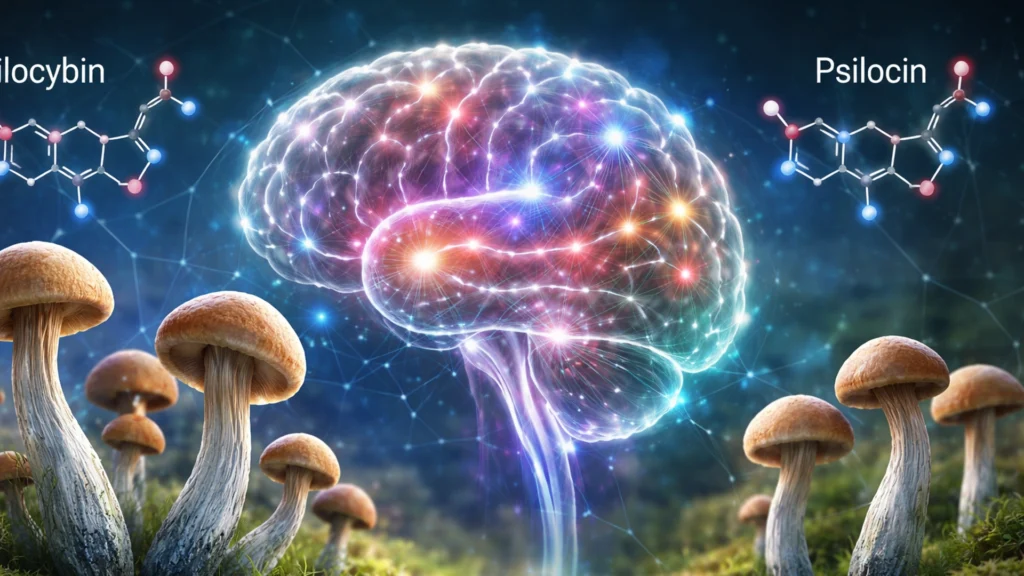
Psilocybin is primarily studied for how it influences communication between different parts of the brain. After psilocybin is converted into psilocin in the body, it interacts with specific serotonin receptors that play a role in mood, perception, and cognition. This interaction does not simply “turn on” or “turn off” parts of the brain, but instead appears to change how different brain regions communicate with one another.
Modern brain imaging techniques have allowed researchers to observe these changes in activity and connectivity, offering insight into why experiences and perception may feel different under altered states. Much of the scientific interest in psilocybin centers on how it affects large-scale brain networks rather than just isolated regions.
Psilocin, the active form of psilocybin, is known to interact primarily with serotonin receptors, especially a subtype often referred to in research as the 5-HT2A receptor. Serotonin is a neurotransmitter involved in many functions, including mood regulation, perception, and cognition.
When psilocin binds to these receptors, it appears to alter normal patterns of signaling in the brain. Rather than simply increasing or decreasing activity, this interaction can change how information is processed and shared across different regions. This is one reason researchers describe psilocybin’s effects in terms of altered communication and integration within the brain, rather than as a simple stimulant or depressant.
One brain system that is frequently discussed in psilocybin research is the “default mode network,” or DMN. This network is associated with functions such as self-referential thinking, daydreaming, memory, and the ongoing narrative people maintain about themselves and their experiences.
Studies suggest that psilocybin can temporarily reduce or reorganize activity within this network. When this happens, other brain networks may communicate more freely with one another, leading researchers to describe the brain as becoming more “globally connected” during these states. From a scientific perspective, this change in network dynamics helps explain why perception, attention, and thought patterns may be experienced differently.
Another major area of research focuses on how psilocybin affects overall brain connectivity. Under typical conditions, certain brain regions communicate more strongly within their own networks and less with others. Research suggests that psilocybin can temporarily change these patterns, allowing for increased cross-communication between areas that do not usually interact as closely.
Scientists study these changes because they provide insight into how the brain constructs perception, meaning, and cognitive frameworks. While the subjective experience can vary widely from person to person, the underlying scientific interest is in how flexible or rigid brain network patterns influence thought, emotion, and learning.
Neuroplasticity is a term used to describe the brain’s ability to change and adapt over time. This includes forming new connections, strengthening existing ones, and reorganizing networks in response to experience, learning, and environment. Neuroplasticity is a normal and ongoing process that plays a role in everything from skill development to memory and emotional processing.
In recent years, scientists have become increasingly interested in how different states of consciousness may relate to neuroplasticity. Psilocybin is one of several compounds being studied in this context, not because it directly “teaches” the brain anything, but because it appears to temporarily change how flexible or rigid certain brain networks are.
In simple terms, neuroplasticity refers to the brain’s capacity to adapt. When people learn something new, practice a skill, or form new habits, the brain changes at a structural and functional level. These changes can involve the creation of new neural pathways or the strengthening and weakening of existing ones.
This adaptability is essential for learning and for adjusting to new experiences. It also explains why the brain is not a fixed or static system, but rather a dynamic network that is constantly being shaped by experience and environment.
Some scientific studies are exploring whether psilocybin is associated with changes in markers related to neural growth and connectivity. Researchers are particularly interested in how altered patterns of brain communication, observed during and after certain states, may relate to the brain’s ability to reorganize and form new connections.
From a research perspective, the focus is not just on short-term changes, but on how shifts in brain network flexibility might influence learning, perception, and patterns of thought over time. This area of study is still developing, and findings continue to be refined as more data becomes available.
While there is growing interest in the relationship between psilocybin and neuroplasticity, many questions remain open. Scientists are still working to understand:
Because of these uncertainties, responsible scientific writing emphasizes that research in this area is ongoing and that conclusions should be viewed as part of a developing field rather than as settled facts.
Scientific interest in psilocybin includes studying how it may influence mood, perception, and patterns of thinking in controlled research settings. Rather than focusing on guarantees or outcomes, researchers examine how changes in brain activity and connectivity correspond with reported experiences and measurable psychological variables.
It is important to understand that this area of study is still evolving. Findings depend on study design, participant selection, dosage, environment, and many other factors. For this reason, responsible scientific discussion emphasizes trends, observations, and open questions rather than definitive conclusions.
Some studies explore how psilocybin relates to mood and emotional processing in structured, supervised environments. Researchers are interested in how changes in brain network activity may correspond with shifts in emotional perspective, attention, or cognitive flexibility.
From a scientific standpoint, the focus is on understanding mechanisms and patterns rather than making claims about treatment or outcomes. Different individuals can respond in very different ways, and results observed in research settings do not automatically generalize to all contexts or all people.
In addition to mood-related research, scientists are also exploring how psilocybin may relate to conditions such as anxiety, trauma, and addictive behaviors within clinical research frameworks. These studies aim to better understand how altered patterns of brain communication might influence rigid or repetitive thought and behavior patterns.
It is important to note that this work is conducted under carefully controlled conditions and is still subject to ongoing review and refinement. The purpose of this research is to build understanding, not to promote unsupervised or generalized use.
Like many emerging areas of science, psilocybin research has limitations. These can include:
Because of these factors, scientists continue to stress the need for more data, broader studies, and long-term follow-up before drawing strong conclusions. This cautious approach is a normal and healthy part of scientific progress.
Long before modern scientific research began, psilocybin-containing mushrooms were used in various cultural and ceremonial contexts. Historical records, archaeological findings, and ethnographic studies suggest that certain Indigenous cultures incorporated these mushrooms into spiritual, healing, and ritual practices.
Understanding this background helps place modern scientific interest in a broader human context. Rather than being a recent discovery, psilocybin mushrooms have a long and complex history that spans geography, culture, and belief systems.
In parts of Mesoamerica and other regions, psilocybin-containing mushrooms were used in ceremonial settings for centuries. These practices were often connected to spiritual traditions, community rituals, and systems of meaning that viewed altered states of consciousness as a way to explore insight, guidance, or connection.
While many details of these traditions were lost or suppressed over time, historical and anthropological research has helped preserve knowledge about how these mushrooms were understood and respected within their cultural contexts. This history is frequently cited in modern discussions as an example of how human societies have long been interested in the relationship between consciousness, perception, and meaning.
In the mid-20th century, psilocybin became a subject of scientific study in Western research institutions, leading to early investigations into perception, cognition, and consciousness. After a long period of limited research, scientific interest has increased again in recent decades as new tools and methods have become available to study the brain.
Today, universities and research organizations around the world are exploring psilocybin within tightly controlled, ethical research frameworks. This renewed interest reflects broader questions about how the brain works, how perception is constructed, and how flexible or rigid patterns of thought and behavior may be understood.efits of psilocybin. Whether you’re curious about its science or looking to explore its potential, we’re here to support your journey into nature’s magic.
Any discussion of psilocybin mushrooms in a scientific or educational context should include careful attention to safety, legality, and personal responsibility. Laws and regulations surrounding psilocybin vary widely by location, and these legal differences play an important role in how research and public discussion are conducted.
In addition to legal considerations, individual health factors, personal circumstances, and environmental context all influence how experiences are perceived and interpreted. For this reason, responsible sources emphasize education, caution, and informed decision-making rather than assumptions or generalizations.
People differ widely in their physical health, mental health, life experiences, and sensitivities. These differences mean that reactions and experiences can vary significantly from one person to another.
From an educational perspective, it is important to recognize that factors such as personal history, current health conditions, and psychological context can influence how someone responds to altered states of consciousness. This is why scientific and academic discussions stress the importance of careful screening, supervision, and context in research settings.
The legal status of psilocybin differs depending on country, state, and local jurisdiction. In some places, it is the subject of regulated research or specific legal frameworks, while in others it remains restricted or prohibited.
Because laws change and can be complex, anyone seeking information about legality should consult reliable, up-to-date local sources rather than relying on general statements. This page is intended to provide scientific and educational context, not legal guidance.
The information on this page is provided for educational and informational purposes only. It is not intended to diagnose, treat, cure, or prevent any condition, nor is it meant to replace professional medical or legal advice.
Anyone with health concerns, legal questions, or personal circumstances that require guidance should consult qualified professionals who can provide advice tailored to their situation.
Psilocybin is a naturally occurring compound found in certain mushroom species. In the body, it is converted into psilocin, which interacts with brain systems involved in perception, mood, and cognition. Scientists study it to better understand how the brain organizes experience and meaning.
Psilocybin is the compound found in mushrooms, while psilocin is the form the body converts it into after ingestion. Psilocin is the compound that more directly interacts with certain serotonin receptors in the brain.
Research suggests that psilocybin changes how different brain networks communicate with each other, particularly systems involved in perception, self-referential thinking, and cognition. Scientists study these changes to better understand brain connectivity and information processing.
Yes. Universities and research institutions around the world are studying psilocybin in controlled, ethical research settings. This research focuses on neuroscience, psychology, and how the brain processes experience.
Current scientific literature generally does not classify psilocybin as physically addictive. However, research continues, and responsible scientific discussion emphasizes understanding both risks and limitations.
No. This page is intended for educational and informational purposes only and does not provide medical or legal advice. Anyone with health or legal questions should consult qualified professionals.


Microdosing magic mushrooms has become a widely discussed topic in wellness, creativity, and mental health circles. Rather than focusing on strong perceptual effects, microdosing typically refers to the practice of consuming very small, sub-perceptual amounts of psilocybin-containing mushrooms for informational, research, or personal exploration purposes.
In this beginner’s guide, we’ll explore what microdosing magic mushrooms means, why people are interested in it, what current research suggests, and important safety and legal considerations to be aware of. Whether you’re researching the topic for educational reasons or simply want a clearer understanding of the concept, this page is designed to give you a balanced, easy-to-understand overview.
Microdosing magic mushrooms refers to the practice of working with very small, sub-perceptual amounts of psilocybin-containing mushrooms. The goal is not to experience strong psychedelic effects, but rather to explore the topic in a way that does not noticeably alter perception, thinking, or sensory experience.
In general discussions, a “microdose” is described as an amount that is small enough to go largely unnoticed in day-to-day activities. People researching microdosing often distinguish it from full psychedelic experiences, which involve clearly noticeable changes in perception, mood, and cognition.
From an educational and research perspective, microdosing is typically discussed in the context of potential effects on creativity, focus, and emotional well-being. However, experiences and outcomes are highly individual, and scientific research in this area is still ongoing and evolving.
It’s also important to note that psilocybin is a regulated substance in many parts of the world, and the legal status of magic mushrooms varies by country, state, and city. Any discussion of microdosing should be approached with awareness of local laws and a focus on safety and responsibility.
Interest in microdosing magic mushrooms has grown as more people explore the topic through podcasts, books, documentaries, and online communities. Rather than seeking intense psychedelic experiences, many people are curious about microdosing for more subtle, everyday reasons.
In surveys, interviews, and anecdotal reports, people commonly mention exploring microdosing in connection with:
It’s important to understand that these are self-reported experiences, not guaranteed outcomes. Individual responses can vary widely based on personal biology, mindset, environment, and many other factors.
Researchers are also interested in microdosing because it raises broader questions about how very small amounts of psychoactive substances interact with the brain. However, scientific evidence is still emerging, and some studies suggest that expectations and placebo effects may play a significant role in what people report experiencing.
For this reason, microdosing is best understood as a topic of ongoing research and personal exploration, rather than a proven method for achieving specific results.

Scientific interest in microdosing psilocybin has increased significantly in recent years, but the research is still developing. Unlike full-dose psychedelic therapy, which has been studied in controlled clinical settings, microdosing is more difficult to study because it involves very small amounts and subtle, often subjective effects.
Some early studies and observational research suggest that people who microdose report changes in mood, focus, creativity, and overall well-being. However, when researchers use blinded or placebo-controlled study designs, the results have been more mixed.
In fact, several studies have found that expectation and placebo effects may explain a substantial portion of the reported benefits. This means that what people believe will happen may influence what they feel, even when the substance itself has little or no measurable effect at very low doses.
At this point, there is no strong scientific consensus that microdosing psilocybin produces consistent or reliable benefits. Researchers continue to study the topic to better understand potential effects, risks, and mechanisms, but much remains unknown.
For readers, the most honest summary is that microdosing remains an active area of research, and many of the claims circulating online are ahead of what science has been able to confirm so far.
The legal status of magic mushrooms and psilocybin varies widely depending on where you live. In many countries and U.S. states, psilocybin remains a controlled or regulated substance, meaning possession, sale, or use may be illegal under local or national law.
In some regions, certain cities or jurisdictions have decriminalized psilocybin or made enforcement a lower priority. However, decriminalization is not the same as legalization, and it does not necessarily mean that buying, selling, or using psilocybin is legally permitted.
Because laws can change and differ significantly from one place to another, it’s essential to check your local regulations and understand how they apply in your area before researching, collecting, or engaging with this topic in any way.
This page is intended for educational and informational purposes only and should not be interpreted as legal advice or encouragement to engage in any activity that may be illegal in your jurisdiction.
Any discussion of microdosing magic mushrooms should include careful attention to safety and individual circumstances. Psilocybin affects people differently, and not everyone responds in the same way.
Some individuals may be more sensitive to psychoactive substances, while others may have underlying physical or mental health conditions that make exploring this topic inadvisable. In particular, people with a history of certain mental health conditions or those taking medications that affect mood or brain chemistry should be especially cautious.
It’s also important to understand that even very small amounts of psychoactive substances can sometimes produce unexpected reactions, including anxiety or discomfort. Because of this, many experts emphasize the importance of education, caution, and personal responsibility when learning about this subject.
This content is provided for informational purposes only and should not be considered medical advice. Anyone with health concerns should consult a qualified healthcare professional before considering any substance-related decisions.
When learning about microdosing magic mushrooms, people often come across discussions of different formats in which psilocybin-containing products may appear. These formats are commonly referenced in educational, research, and collection contexts.
Some of the most frequently discussed forms include:
Each format has its own characteristics in terms of appearance, storage, and presentation. From an informational standpoint, these differences are usually discussed in terms of organization, preservation, and documentation, rather than outcomes or effects.
If you’re exploring this topic from a research or collection perspective, understanding the different formats can help you better navigate the broader conversation around psilocybin-containing products.
One of the most common points of confusion for people new to this topic is the difference between microdosing and full psychedelic experiences.
Microdosing is generally discussed as involving amounts that are intended to remain sub-perceptual, meaning they do not produce strong or obvious changes in perception, thinking, or sensory experience. The focus, at least in theory, is on subtlety and maintaining normal day-to-day functioning.
In contrast, full psychedelic experiences with psilocybin are associated with clearly noticeable and sometimes intense changes in perception, emotions, and cognition. These experiences are typically the ones described in documentaries, research studies, or personal stories involving visual changes, altered sense of time, or deeply introspective states.
Understanding this distinction is important because the two are often discussed online as if they were the same, when in reality they are very different in intention, intensity, and context.
Microdosing magic mushrooms generally refers to working with very small, sub-perceptual amounts of psilocybin-containing mushrooms. The idea is to avoid strong psychedelic effects while exploring the topic in an educational or research-oriented context.
Microdosing is typically described as being sub-perceptual, meaning it should not produce strong or obvious changes in perception, senses, or thinking. If noticeable psychedelic effects occur, that would no longer be considered a microdose in common usage of the term.
In surveys and anecdotal reports, people often mention topics such as creativity, focus, mood, or mindfulness. However, these reports are subjective, and scientific studies suggest that expectations and placebo effects may play a significant role.
At this time, there is no strong scientific consensus that microdosing psilocybin produces consistent or reliable benefits. Research is ongoing, and some studies indicate that perceived benefits may be largely influenced by expectation and placebo effects.
The legality of psilocybin and magic mushrooms varies widely by country, state, and city. In many places, they remain illegal or regulated. Some areas have decriminalized them, but decriminalization is not the same as legalization. Always check your local laws.
Psilocybin can affect people differently, and even small amounts can sometimes cause unexpected reactions such as anxiety or discomfort. People with certain medical or mental health conditions, or those taking specific medications, should be especially cautious and consult a healthcare professional.
Microdosing is intended to be sub-perceptual and subtle, while full psychedelic experiences involve clearly noticeable and sometimes intense changes in perception, mood, and cognition. They are very different in intensity and purpose.
In educational and research discussions, people often mention formats such as dried mushrooms, capsules, or infused products. These are usually discussed in terms of storage, preservation, or presentation rather than effects or outcomes.
If you’re researching psilocybin-containing mushrooms or exploring this topic from an educational or collection perspective, Mindwell Mushrooms offers a carefully curated selection of products prepared and presented with a strong focus on quality, consistency, and attention to detail.
Our catalog includes a variety of formats commonly discussed in educational and research contexts, including:
At Mindwell, we prioritize discreet handling, careful packaging, and reliable fulfillment. Every product is processed with attention to quality and consistency, from preparation to delivery.
Mindwell Mushrooms is committed to quality standards, responsible presentation, and customer privacy.

Magic mushroom honey, often called blue honey, is a popular way to preserve and consume psilocybin mushrooms. Learn its benefits, how it works, and how to make it.
[...]
Explore psilocybin mushrooms in Orange County, including what they are, how they work, and the current legal status in California. This guide covers psilocybin research, common mushroom varieties, safety considerations, and the growing conversation around psychedelic studies.
[...]
