


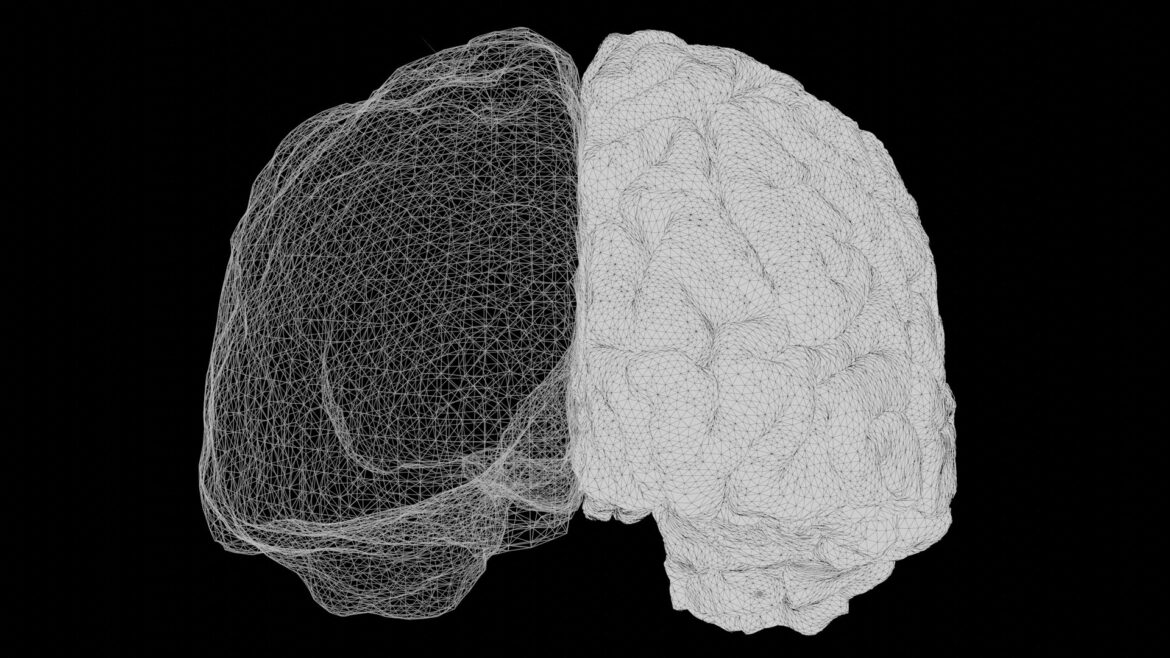
The human brain is organized into large-scale networks that coordinate different aspects of perception, attention, memory, emotion, and self-awareness. One of the most studied of these systems is the Default Mode Network, commonly abbreviated as the DMN. It has become especially important in psychedelic neuroscience because psilocybin appears to temporarily alter the way this network functions and communicates with the rest of the brain.
The DMN is often discussed as though it were the brain’s “ego center,” but that description is too simple. The network contributes to self-referential thinking, autobiographical memory, imagining the future, mind wandering, and the ongoing narrative people construct about themselves. The sense of self, however, depends on many interacting brain systems rather than one isolated network.
Direct answer: The Default Mode Network is a set of interconnected brain regions involved in internally focused thought, including self-reflection, autobiographical memory, and mental simulation. Psilocybin appears to temporarily reduce the usual synchronization and segregation of the DMN while increasing communication across normally distinct brain networks. These changes may contribute to altered self-perception and cognitive flexibility, but scientists have not established that DMN disruption alone explains psychedelic experiences or therapeutic effects.
What Is the Default Mode Network?
The Default Mode Network was identified through brain-imaging research showing that several distant brain regions display coordinated activity when a person is not focused on a demanding external task. Instead of being inactive during rest, the brain remains highly organized, and some regions become particularly engaged during internally oriented mental activity.
Major regions commonly associated with the DMN include portions of the medial prefrontal cortex, posterior cingulate cortex, precuneus, and angular gyrus, along with connected structures involved in memory and higher-order association. Researchers generally think of the DMN as a distributed network rather than a single anatomical structure.
What Does the Default Mode Network Normally Do?
The DMN has been associated with several forms of internally directed cognition. These include thinking about one’s own personality or experiences, remembering past events, imagining possible futures, evaluating social relationships, understanding another person’s perspective, and allowing thoughts to wander when attention is not tightly focused on an external task.
- Self-referential thinking and personal narrative
- Autobiographical memory
- Imagining future events
- Mind wandering and spontaneous thought
- Social cognition and thinking about other people
- Integration of information across time and personal experience
These functions help create continuity between past experiences, present identity, and expectations about the future. That is one reason the DMN has attracted so much interest in research on consciousness and psychedelic states.
Why Is the Default Mode Network Important in Psilocybin Research?
Psilocybin is converted in the body into psilocin, which interacts strongly with serotonin receptors, particularly the 5-HT2A receptor. As described in our guide to psilocybin and psilocin, this receptor-level activity can influence far larger patterns of communication across the brain.
Functional MRI studies have repeatedly found that classic psychedelics alter the organization of large-scale brain networks. The DMN has received particular attention because changes within the network often occur alongside changes in self-experience, perception, and the normal boundaries between internally generated thought and external sensory information.
A 2024 human neuroimaging study reported widespread psilocybin-related desynchronization across the brain, with particularly strong changes in the DMN. More recent reviews and meta-analyses continue to support a general pattern of reduced within-network integrity and greater communication across networks, while also emphasizing that study methods and results are not identical across every dataset.
How Does Psilocybin Affect the Default Mode Network?
The clearest way to describe the current evidence is that psilocybin appears to make the brain’s usual network organization less rigid. Within the DMN, regions that normally show strongly coordinated activity can become less synchronized. At the same time, the boundaries separating the DMN from other networks may become less distinct.
Reduced Within-Network Synchronization
Under ordinary conditions, regions within a functional network show correlated activity. During the acute effects of psilocybin, that coordination can decrease within the DMN. Researchers refer to this using terms such as reduced network integrity, decreased within-network connectivity, desynchronization, or reduced coherence.
These terms do not mean that the network disappears. They describe a temporary change in the consistency of its usual activity pattern.
Reduced Segregation Between Networks
Brain networks normally specialize in different types of processing. Psilocybin appears to temporarily reduce some of that specialization by increasing communication between networks that are usually more separate. Researchers sometimes describe this as reduced network segregation or increased global integration.
This broader cross-network communication may help explain why sensory information, emotion, memory, and abstract thought can become unusually intertwined during psychedelic states. Our broader article on what psilocybin does to the brain explores these whole-brain effects in more detail.
Does Psilocybin “Turn Off” the Default Mode Network?
No. The claim that psilocybin simply turns off the Default Mode Network is an oversimplification.
Early psychedelic brain-imaging research sometimes generated headlines describing reduced activity or connectivity in important DMN regions. Subsequent work has produced a more detailed picture involving changes in synchronization, connectivity, network boundaries, and interactions between the DMN and other systems.
The DMN remains part of the functioning brain during the experience. What changes is the way its regions coordinate with one another and how the network fits into the larger architecture of brain activity.
The Default Mode Network and the Sense of Self
The DMN is frequently associated with self-referential thought because several of its functions contribute to the brain’s ongoing model of personal identity. Remembering one’s past, evaluating one’s current situation, imagining one’s future, and interpreting experiences in relation to a personal narrative all contribute to the ordinary feeling of being a continuous self.
Psilocybin can temporarily alter these processes. Some participants in psychedelic studies describe a reduced distinction between themselves and their surroundings, changes in personal identity, or the feeling that their usual internal narrative has become less dominant.
Is the DMN the Brain’s “Ego Center”?
No single brain region or network has been established as an ego center. Calling the DMN the ego center can be useful as a metaphor in casual discussion, but it exaggerates what neuroscience has actually demonstrated.
The DMN contributes to self-related processing, but self-awareness also depends on sensory systems, memory networks, attention, interoception, emotional processing, executive function, and other distributed circuits. The subjective sense of self emerges from their interaction.
What Is Ego Dissolution?
Ego dissolution is a term used in psychedelic research to describe a temporary weakening of the ordinary sense of personal boundaries or identity. A person may feel less separate from the surrounding environment, experience a diminished sense of being an isolated observer, or temporarily lose the familiar narrative structure of “me” and “my story.”
Studies have reported associations between the intensity of ego-dissolution experiences and changes in functional connectivity or network organization. However, correlation does not establish that one DMN measurement directly causes the entire subjective experience.
Researchers increasingly examine ego dissolution as a whole-brain phenomenon involving changes across multiple networks rather than attributing it exclusively to the Default Mode Network.
What Does “Brain Desynchronization” Mean?
The term desynchronization can sound alarming, but in psychedelic neuroscience it does not mean that the brain is malfunctioning or becoming inactive. It describes a temporary reduction in the usual similarity or coordination of activity patterns across regions.
In a highly synchronized network, areas tend to fluctuate together in relatively predictable ways. Psilocybin can make those patterns less tightly coupled, increasing the number of possible configurations through which activity can move.
A major 2024 study found that psilocybin produced widespread desynchronization across spatial scales and reduced the normal distinctions between functional networks. The effects were especially strong in the Default Mode Network and were related to the intensity of the subjective psychedelic experience.
Psilocybin, Brain Entropy, and Cognitive Flexibility
Another concept often used to describe psychedelic brain states is entropy. In this context, entropy refers to the variability and diversity of possible patterns of brain activity. A higher-entropy state is less constrained by a small number of dominant activity patterns.
This does not automatically mean better brain function. Instead, it suggests a temporarily broader repertoire of network configurations. That flexibility may contribute to unusual associations, altered perspectives, and changes in the relationship between sensory information and expectations.
Researchers have proposed that loosening strongly established patterns could help explain why some people report seeing familiar problems from new perspectives. However, this remains a mechanistic hypothesis rather than proof that greater entropy is inherently therapeutic.
The Default Mode Network, Rumination, and Depression
The DMN is also studied in depression because repetitive self-focused thinking and rumination have been associated with altered patterns of activity and connectivity within parts of this network. Rumination involves repeatedly returning to negative thoughts, memories, or self-evaluations, often without reaching a useful resolution.
This has led researchers to investigate whether psilocybin’s temporary reduction of rigid network organization could interrupt entrenched patterns of self-referential thought. Some clinical imaging studies have found relationships between network changes and improvements in depressive symptoms, but the direction and meaning of these effects are still being investigated.
Our article on psilocybin and depression discusses the clinical evidence in greater detail. Importantly, results from controlled clinical studies should not be treated as evidence that unsupervised psychedelic use is equivalent to psychedelic-assisted therapy.
The Default Mode Network and Neuroplasticity
Brain-network reorganization and neuroplasticity are related research areas, but they are not the same phenomenon. Functional connectivity measures how regions communicate or fluctuate together, while neuroplasticity refers more broadly to the nervous system’s ability to change its structure, connections, or function.
Preclinical research suggests that psychedelics can promote structural and synaptic plasticity in certain neural circuits, while human imaging studies show temporary changes in large-scale network organization. Researchers are studying whether these processes interact and whether temporary network flexibility creates conditions that support longer-lasting learning or adaptation.
For a deeper discussion of these mechanisms, see our guide to psilocybin and neuroplasticity.
How Do Scientists Study the Default Mode Network?
Much of what researchers know about the DMN comes from functional magnetic resonance imaging, or fMRI. Unlike a structural MRI, which produces detailed anatomical images, fMRI tracks changes in blood oxygenation that are associated with neural activity.
Researchers can compare the timing of these signals across different brain regions. When two regions show strongly correlated fluctuations, scientists infer that they may be participating in a shared functional network. This statistical relationship is called functional connectivity.
Resting-State fMRI
Many DMN studies use resting-state fMRI. Participants lie in the scanner without performing a demanding task, allowing researchers to study spontaneous patterns of coordinated brain activity. The DMN was originally characterized largely through this type of research.
What fMRI Cannot Tell Us
Functional connectivity is not a direct recording of thoughts, and it does not prove that two regions are communicating in a simple one-way causal chain. fMRI also measures changes in blood-oxygen signals rather than electrical activity directly.
This distinction matters because brain-network images can appear more definitive than they really are. Researchers use sophisticated statistical methods to identify patterns, but those patterns still require careful interpretation.
What Recent Research Has Added
The psychedelic neuroimaging field has expanded considerably beyond the earliest small fMRI experiments. Systematic reviews now identify recurring findings across multiple studies, including acute reductions in within-network connectivity and increased communication between normally segregated networks.
At the same time, recent reviews emphasize meaningful limitations. Studies differ in dose, participant characteristics, scanning methods, analysis techniques, psychological context, and timing. Some published analyses also reuse the same underlying datasets, meaning the apparent number of papers can be larger than the number of truly independent participant samples.
A 2026 systematic review of psilocybin fMRI research identified 20 unique datasets and noted that follow-up scanning remained limited in many studies. This is an important reminder that the acute brain response is better characterized than the precise mechanisms connecting temporary network changes to long-term psychological outcomes.
Can Default Mode Network Changes Last After Psilocybin Wears Off?
Most of the dramatic network changes observed during psilocybin administration occur during the acute psychedelic state and diminish as the drug is metabolized. However, some studies have found connectivity differences that persist beyond the period of obvious subjective effects.
For example, recent research has reported longer-lasting changes involving connectivity between the anterior hippocampus and the Default Mode Network. Scientists are investigating whether such changes relate to learning, neuroplasticity, or therapeutic outcomes.
It would be premature, however, to conclude that psilocybin permanently resets the DMN. The duration, consistency, and clinical meaning of post-acute network changes are still under investigation.
Does DMN Disruption Explain the Therapeutic Effects of Psilocybin?
Not by itself. The Default Mode Network is an important piece of psychedelic neuroscience, but therapeutic outcomes are unlikely to depend on one network change alone.
Potential mechanisms under investigation include:
- 5-HT2A serotonin receptor signaling
- Changes in connectivity within and between large-scale brain networks
- Temporary reductions in rigid or repetitive activity patterns
- Neuroplasticity and synaptic change
- Emotional processing and memory
- Psychological expectations and context
- The subjective experience itself
- Therapeutic preparation, support, and integration in clinical settings
A systematic review of psychedelic DMN research concluded that the network is consistently affected but that its precise role in therapeutic effects remains uncertain. This is a useful distinction: the evidence that psychedelics affect the DMN is stronger than the evidence that DMN disruption by itself causes clinical improvement.
Common Misconceptions About Psilocybin and the Default Mode Network
Myth: Psilocybin completely shuts down the DMN.
Reality: Psilocybin changes synchronization, connectivity, and network organization. The DMN does not simply switch off.
Myth: The DMN is the brain’s ego center.
Reality: The DMN contributes to self-referential processing, but the sense of self emerges from multiple interacting systems.
Myth: Less DMN activity automatically means better mental health.
Reality: Brain-network relationships are more complicated. Reduced connectivity in one context is not automatically beneficial, and greater connectivity is not automatically harmful.
Myth: Ego dissolution proves the DMN has stopped working.
Reality: Ego dissolution is associated with broad changes in brain-network organization. No single measurement completely explains the experience.
Myth: Brain scans prove exactly why psilocybin therapy works.
Reality: Imaging studies reveal important associations and mechanisms, but researchers are still determining how acute brain changes relate to sustained clinical outcomes.
Frequently Asked Questions
The Default Mode Network, or DMN, is a group of interconnected brain regions that tends to become active during internally focused mental activity such as self-reflection, autobiographical memory, mind wandering, imagining the future, and thinking about other people.
Brain-imaging studies suggest that psilocybin can temporarily reduce the usual integrity or synchronization within parts of the Default Mode Network while increasing communication between brain networks that are normally more segregated.
No. Describing psilocybin as simply shutting down the DMN is misleading. Research points to temporary changes in network organization, synchronization, connectivity, and interaction with other brain systems rather than a complete switch-off.
No. The DMN contributes to self-referential processing and autobiographical thought, but there is no single ego center in the brain. The sense of self emerges from interactions among multiple brain systems.
Ego dissolution is a temporary experience in which the usual boundaries of personal identity or separation between self and surroundings feel reduced. Studies have found associations between psychedelic-related network changes and ego-dissolution experiences, but no single brain network completely explains the phenomenon.
Researchers study the DMN in depression because repetitive self-focused thought and rumination have been associated with altered activity and connectivity in parts of this network. Psilocybin research is investigating whether temporary changes in network organization may relate to changes in rigid patterns of thought, but the mechanism is not fully established.
Psilocybin can increase communication between some brain networks while decreasing connectivity or synchronization within others. A recurring finding is reduced segregation between networks, meaning brain systems that are normally relatively distinct may temporarily interact more freely.
Brain desynchronization refers to a temporary reduction in the usual coordinated activity patterns that define established brain networks. It does not mean the brain stops functioning; rather, network boundaries and activity patterns can become less rigid during the psychedelic state.
Most observed psychedelic-related DMN changes are acute and occur while the drug is active. Some studies have reported connectivity changes that persist beyond the acute period, but the duration, significance, and relationship to long-term outcomes remain active areas of research.
Researchers commonly use functional magnetic resonance imaging, or fMRI, to measure correlated changes in blood-oxygen-level signals across different brain regions. These correlations help scientists estimate functional connectivity within and between brain networks.
Not by itself. DMN changes are one part of a much broader picture that includes serotonin 5-HT2A receptor signaling, changes across multiple brain networks, neuroplasticity, emotional processing, psychological context, and structured therapeutic support in clinical research.
No. The name comes from early observations that certain regions show coordinated activity during rest, but the DMN also participates in active processes such as autobiographical thinking, imagining future events, considering other people’s perspectives, and constructing an ongoing sense of self.
What the Default Mode Network Tells Us About Psilocybin and the Brain
The Default Mode Network provides researchers with an important window into how psilocybin changes the organization of human brain activity. Rather than acting on one isolated “psychedelic center,” psilocybin begins with receptor-level effects—especially through 5-HT2A signaling—and influences communication across interconnected brain systems.
Within the DMN, the usual synchronization of activity can temporarily decrease. At the same time, boundaries between established networks can become less rigid, allowing patterns of communication that are less common during ordinary waking consciousness. These changes may contribute to altered self-perception, unusual associations, shifts in attention, and the experience of ego dissolution.
The most important scientific caution is that the DMN should not be treated as a complete explanation for consciousness or psychedelic therapy. The network is consistently implicated in psilocybin research, but current evidence points toward a broader process involving multiple brain networks, receptor systems, neuroplasticity, psychological context, and subjective experience.
As neuroimaging studies grow larger and include more long-term follow-up, researchers should be able to distinguish more clearly between the brain changes that accompany the acute psychedelic state and those that may contribute to lasting psychological outcomes. For now, the evidence supports a nuanced conclusion: psilocybin temporarily reorganizes the Default Mode Network and broader brain connectivity, but scientists are still determining exactly what those changes mean for consciousness, cognition, and mental health.
Research References
Nature: Psilocybin desynchronizes the human brain
Systematic review: Default Mode Network modulation by psychedelics
2026 systematic review of psilocybin functional-connectivity fMRI studies


