


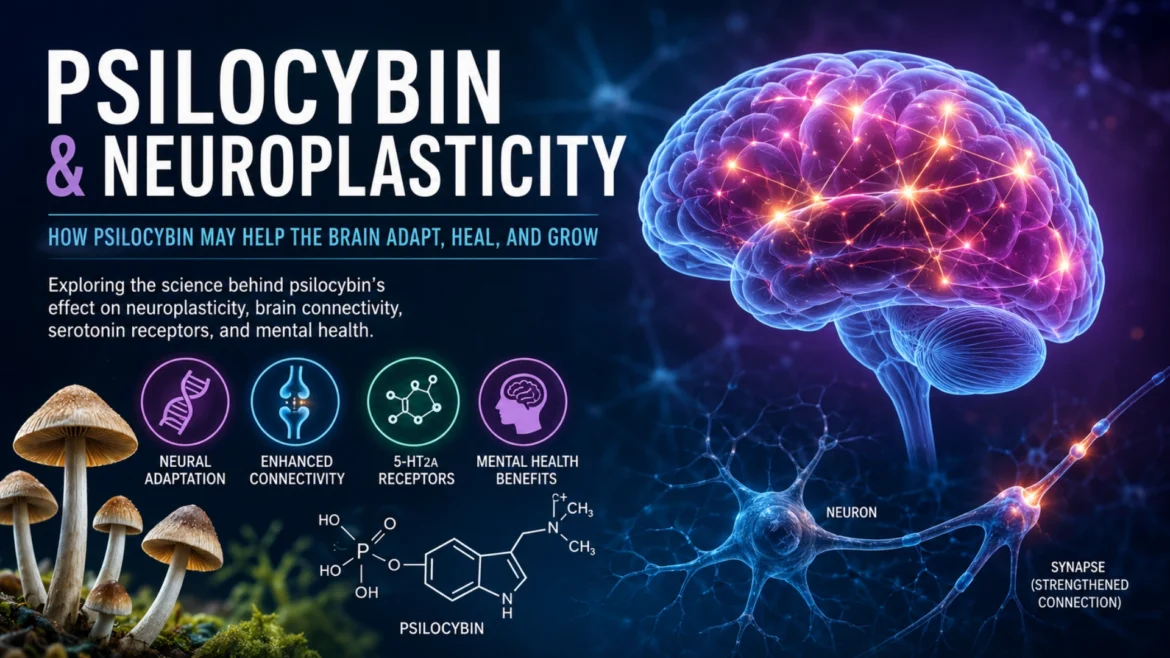
The human brain has an extraordinary ability to adapt, reorganize, and form new neural connections throughout life. This process, known as neuroplasticity, plays an important role in learning, memory, recovery from injury, and how people respond to new experiences. In recent years, scientists have become increasingly interested in whether psilocybin—the naturally occurring psychedelic compound found in certain mushroom species—may influence these processes.
Research into psilocybin has expanded rapidly over the past decade, particularly in studies examining depression, anxiety, post-traumatic stress disorder (PTSD), addiction, and other neurological or psychiatric conditions. While many of these studies have focused on therapeutic doses administered under clinical supervision, researchers are also exploring the biological mechanisms that may explain why psilocybin appears to produce lasting changes in some participants.
One of the leading areas of investigation is neuroplasticity. Laboratory studies have suggested that psilocybin may influence the growth and communication of neurons, while brain imaging studies are helping researchers better understand how psychedelic compounds affect neural networks. Although many questions remain unanswered, these discoveries have made neuroplasticity one of the most exciting areas of modern psychedelic research.
This guide explains what neuroplasticity is, how psilocybin interacts with the brain, what current research has found, and why scientists continue to study the relationship between psilocybin and brain plasticity.
What Is Neuroplasticity?
Neuroplasticity is the brain’s ability to adapt by forming, strengthening, and reorganizing neural connections throughout life. Researchers are studying whether psilocybin may influence neuroplasticity by affecting serotonin receptors and the communication pathways between neurons, although this research is still evolving.
What Is Neuroplasticity?
Neuroplasticity, sometimes referred to as brain plasticity, is the brain’s ability to adapt by changing its structure, function, and communication pathways throughout life. Rather than remaining fixed after childhood, the brain continuously forms, strengthens, weakens, and reorganizes connections between neurons in response to learning, experiences, injuries, and changes in the environment.
For many years, scientists believed that the adult brain had only a limited ability to change. Modern neuroscience has shown that this is not the case. Research has demonstrated that the brain remains remarkably adaptable throughout adulthood, allowing people to acquire new skills, form memories, recover from certain injuries, and adapt to new experiences.
How the Brain Changes
The human brain contains billions of nerve cells called neurons. These neurons communicate through specialized connection points known as synapses, forming vast networks that allow the brain to process information.
Neuroplasticity involves several biological processes, including:
- Forming new neural connections between neurons
- Strengthening existing communication pathways
- Weakening or eliminating less frequently used connections
- Reorganizing neural networks in response to learning or injury
- Supporting the growth of new dendritic branches that help neurons communicate
Together, these processes allow the brain to continuously adapt throughout life.
Why Neuroplasticity Is Important
Neuroplasticity plays an essential role in many aspects of brain function. Researchers have linked healthy neuroplasticity to:
- Learning new information
- Memory formation
- Skill development
- Emotional adaptation
- Recovery following certain brain injuries
- Adapting to new environments and experiences
Scientists are also studying how changes in neuroplasticity may relate to various neurological and mental health conditions, making it an important area of ongoing medical research.
Neuroplasticity and Mental Health Research
One reason neuroplasticity has attracted so much attention is its potential relationship to mental health. Researchers have observed that certain conditions—including depression, anxiety, and post-traumatic stress disorder (PTSD)—may involve alterations in how specific brain networks communicate and adapt over time.
Understanding how neuroplasticity works may help scientists develop new approaches for studying these conditions. This has contributed to growing interest in compounds such as psilocybin that appear to influence the brain in unique ways.
Why Researchers Are Interested in Psilocybin
Scientists are investigating whether psilocybin may temporarily influence the brain’s ability to reorganize and form new neural connections. Laboratory research has suggested that psilocybin may affect signaling pathways involved in neuroplasticity, while brain imaging studies are helping researchers observe changes in network activity following psilocybin administration.
Although these findings are promising, researchers continue to study exactly how these biological changes occur and whether they contribute to the long-term effects observed in some clinical studies.
Key Point to Understand
Neuroplasticity is the brain’s natural ability to adapt by reorganizing and strengthening neural connections throughout life. It plays a central role in learning, memory, and recovery, and researchers are actively studying whether psilocybin may influence these processes through its effects on brain signaling and neural communication.
How Does Psilocybin Work in the Brain?
Understanding how psilocybin may influence neuroplasticity begins with understanding what happens after it enters the body. Although psilocybin is the compound naturally found in certain mushroom species, it is not the primary substance that directly affects the brain.
Instead, psilocybin serves as a prodrug, meaning it is converted by the body into another compound called psilocin, which is responsible for most of psilocybin’s neurological effects.
From Psilocybin to Psilocin
After psilocybin is consumed, enzymes in the digestive system and liver remove a phosphate group from the molecule, converting it into psilocin.
Psilocin is structurally similar to serotonin, an important neurotransmitter involved in regulating mood, learning, memory, perception, and many other brain functions.
Because of this similarity, psilocin is able to interact with several serotonin receptors throughout the brain.
The Importance of the 5-HT2A Receptor
Among the serotonin receptors, one has received particular attention from researchers: the 5-HT2A receptor.
This receptor is found in regions of the brain involved in:
- Learning
- Memory
- Decision-making
- Emotional processing
- Sensory perception
- Cognitive flexibility
Current evidence suggests that activation of the 5-HT2A receptor plays a central role in many of psilocybin’s observed effects, including the changes in brain activity being investigated in neuroplasticity research.
Although scientists continue to study additional pathways, the 5-HT2A receptor is widely considered one of the primary biological targets of psilocin.
Changes in Brain Communication
Brain imaging studies have shown that psilocybin may temporarily alter how different regions of the brain communicate with one another.
Rather than increasing activity in a single area, researchers have observed changes across multiple brain networks, including patterns of connectivity that are not typically seen under ordinary conditions.
These temporary changes in communication are one reason scientists believe psilocybin may create opportunities for new patterns of thinking and learning, although researchers continue to investigate exactly how these effects relate to long-term neuroplasticity.
The Default Mode Network
One brain network that has attracted significant scientific attention is the Default Mode Network (DMN).
The DMN is active during self-reflection, autobiographical thinking, and internally focused mental activity. Some researchers have observed that psilocybin temporarily alters activity within this network while increasing communication between brain regions that do not normally interact as extensively.
Scientists are studying whether these temporary changes may contribute to the psychological and neurological effects observed in clinical research. However, the precise relationship between changes in the DMN and long-term therapeutic outcomes remains an active area of investigation.
Why This Matters for Neuroplasticity
Researchers believe that changes in serotonin signaling, brain network communication, and neuronal activity may help create conditions that support neuroplasticity.
Rather than acting through a single mechanism, psilocybin appears to influence multiple interconnected biological systems. Understanding how these systems interact is one of the central goals of modern psychedelic neuroscience.
As additional research becomes available, scientists hope to better understand how these temporary changes may relate to longer-lasting adaptations within the brain.
Key Point to Understand
Psilocybin itself is converted into psilocin, which primarily interacts with 5-HT2A serotonin receptors throughout the brain. These interactions appear to temporarily alter communication between brain networks, leading researchers to investigate whether they also contribute to neuroplasticity and other long-term neurological changes.
What Research Has Found About Psilocybin and Neuroplasticity
One of the most active areas of psychedelic research is understanding whether psilocybin influences neuroplasticity in ways that extend beyond its temporary effects on perception and brain activity. Over the past decade, laboratory experiments, animal studies, brain imaging research, and clinical trials have all contributed to a growing body of evidence suggesting that psilocybin may affect how neurons communicate and adapt.
While many findings are encouraging, researchers emphasize that neuroplasticity is an extraordinarily complex biological process. Much remains to be learned about how psilocybin influences the brain and whether these changes translate into long-term clinical benefits.
Laboratory Research
Studies conducted in laboratory settings have provided some of the earliest evidence that psychedelic compounds may influence neuroplasticity.
Researchers have observed that psilocybin and psilocin appear to affect signaling pathways involved in:
- Neuronal communication
- Synaptic activity
- Dendritic branching
- Neural connectivity
Some laboratory studies have also reported changes associated with proteins involved in neuronal growth and communication, helping scientists better understand the biological mechanisms that may contribute to neuroplasticity.
Although these findings are important, laboratory research represents only one step in understanding how these processes function in living humans.
Animal Studies
Animal research has provided additional insight into how psilocybin may influence the brain.
Several studies have reported increases in:
- Dendritic spine density
- Synaptic growth
- Neural connectivity
- Structural changes associated with learning and adaptation
These observations have led researchers to investigate whether similar mechanisms may occur in humans.
However, scientists caution that findings from animal studies cannot be directly applied to people because the human brain is considerably more complex and many biological differences exist between species.
Human Brain Imaging Studies
Advances in brain imaging technology have allowed researchers to observe how psilocybin temporarily changes communication between different regions of the human brain.
Studies using functional magnetic resonance imaging (fMRI) and other imaging techniques have reported:
- Changes in functional connectivity
- Altered activity within the Default Mode Network (DMN)
- Increased communication between brain regions that do not typically interact as strongly
- Temporary changes in network organization
These findings suggest that psilocybin may create a period of increased flexibility in how brain networks communicate, although researchers continue to study whether these changes contribute directly to long-term neuroplasticity.
Clinical Research
Clinical trials investigating psilocybin-assisted therapy have also contributed to growing interest in neuroplasticity.
Some studies have reported improvements in symptoms associated with depression, anxiety, and other conditions that persisted long after psilocybin had left the body.
These lasting changes have prompted researchers to investigate whether neuroplasticity may help explain why some participants experience continued improvements following professionally supervised therapeutic sessions.
While this hypothesis is supported by several lines of evidence, scientists continue to study exactly how these biological and psychological changes interact.
Brain-Derived Neurotrophic Factor (BDNF)
Another important area of investigation involves Brain-Derived Neurotrophic Factor (BDNF), a protein that supports the growth, maintenance, and survival of neurons.
BDNF plays an essential role in learning, memory, and neuroplasticity. Some researchers are studying whether psilocybin influences pathways associated with BDNF, although findings remain mixed and additional research is needed to determine the extent of this relationship.
Because BDNF is involved in many biological processes, scientists continue to investigate how changes in this protein may relate to the broader effects of psilocybin on the brain.
What Scientists Agree On
Although many questions remain unanswered, several themes consistently emerge across current research:
- Psilocybin clearly affects brain function.
- Psilocin primarily acts through serotonin receptors, especially the 5-HT2A receptor.
- Laboratory and animal studies provide evidence of changes associated with neuroplasticity.
- Human brain imaging demonstrates temporary changes in network connectivity.
- More long-term human studies are needed to determine how these biological changes relate to lasting therapeutic outcomes.
As research continues, scientists hope to better understand how these different findings fit together and what they may mean for future neuroscience and mental health treatments.
Key Point to Understand
Current research suggests that psilocybin may influence several biological processes associated with neuroplasticity, including neuronal communication, brain network connectivity, and pathways involved in neural growth. While laboratory, animal, and human studies have produced encouraging findings, researchers continue to investigate how these changes contribute to long-term brain function and clinical outcomes.
Potential Applications Being Studied
Researchers are investigating whether the neuroplasticity associated with psilocybin may contribute to future advances in neuroscience and mental health treatment. While much of the research remains in its early stages, scientists are exploring how temporary changes in brain connectivity and neural adaptation may support therapeutic approaches for a variety of conditions.
It is important to emphasize that many of these applications are still under investigation. Although clinical trials have produced encouraging findings in some areas, psilocybin-assisted therapy continues to be studied, and additional research is needed to better understand its long-term safety, effectiveness, and appropriate clinical use.
Depression
One of the most active areas of psilocybin research involves major depressive disorder and treatment-resistant depression.
Researchers are studying whether psilocybin-assisted therapy may help interrupt persistent patterns of negative thinking by temporarily altering communication between brain networks and supporting adaptive changes associated with neuroplasticity.
Several clinical trials have reported promising results, but scientists continue to investigate how long these effects may last, which patients are most likely to benefit, and the biological mechanisms involved.
Anxiety and End-of-Life Distress
Researchers have also investigated psilocybin-assisted therapy for anxiety, particularly among individuals facing life-threatening illnesses.
Some studies have reported meaningful improvements in psychological well-being following carefully supervised therapeutic sessions. Scientists continue to explore whether neuroplasticity may play a role in helping individuals process emotions and adapt to difficult life experiences.
Further research is needed to better understand these findings and determine how they may apply across broader populations.
Post-Traumatic Stress Disorder (PTSD)
Interest is growing in whether neuroplasticity could help explain some of the psychological changes observed during psychedelic-assisted therapy for trauma-related conditions.
Researchers are studying whether temporary changes in brain connectivity may create opportunities for new learning, emotional processing, and the modification of deeply ingrained thought patterns.
Although this area of research is expanding, evidence specific to psilocybin and PTSD remains limited compared with research involving depression.
Substance Use Disorders
Scientists are investigating whether psilocybin-assisted therapy may support treatment for substance use disorders, including alcohol and nicotine dependence.
Current research suggests that therapeutic experiences involving psilocybin may help some individuals reconsider established behavioral patterns and strengthen motivation for change. Researchers continue to explore whether neuroplasticity contributes to these observed outcomes.
Because these studies are conducted in structured clinical settings with professional support, their findings should not be generalized to unsupervised use.
Cognitive Flexibility and Learning
Neuroplasticity is closely linked to cognitive flexibility, or the brain’s ability to adapt when faced with new information or changing circumstances.
Researchers are exploring whether psilocybin’s effects on brain network communication may temporarily enhance this flexibility, allowing individuals to approach thoughts, emotions, or behaviors from new perspectives.
Although this hypothesis has attracted considerable scientific interest, additional research is needed to determine how these temporary changes relate to lasting improvements in cognition or mental well-being.
Why Researchers Remain Cautious
Despite growing enthusiasm surrounding psychedelic science, researchers consistently emphasize the importance of careful interpretation.
Many of the most promising findings come from:
- Carefully controlled clinical trials
- Professionally supervised therapeutic settings
- Highly selected participant groups
- Ongoing research programs
Questions about long-term outcomes, optimal treatment approaches, and individual differences remain active areas of investigation.
Key Point to Understand
Researchers are exploring whether psilocybin-related neuroplasticity may contribute to future treatments for conditions such as depression, anxiety, PTSD, and substance use disorders. While early findings are encouraging, these potential applications remain the subject of ongoing clinical research, and scientists continue to study how neuroplasticity influences therapeutic outcomes.
Limitations of Current Research
Although research into psilocybin and neuroplasticity has expanded rapidly, scientists continue to emphasize that many important questions remain unanswered. Laboratory experiments, animal studies, brain imaging, and clinical trials have all contributed valuable insights, but each type of research has its own strengths and limitations.
Understanding these limitations helps place current findings into context and highlights why researchers continue to call for larger, longer-term studies.
Much of the Evidence Is Still Emerging
Compared with many areas of neuroscience, modern psilocybin research is relatively young. Although interest in psychedelic science has grown significantly over the past decade, many published studies involve relatively small numbers of participants.
Smaller studies can provide valuable early evidence, but larger clinical trials are generally needed to confirm findings across more diverse populations.
Laboratory Findings Do Not Always Translate to Humans
Laboratory and animal studies have demonstrated biological changes associated with neuroplasticity, including alterations in neuronal growth and synaptic communication.
While these findings help scientists understand possible mechanisms, results observed in isolated cells or animal models cannot automatically be assumed to occur in the same way in the human brain.
Human neurobiology is considerably more complex, and additional clinical research is needed to better understand these relationships.
Therapeutic Settings Differ From Everyday Conditions
Many of the most promising clinical studies involving psilocybin have taken place in carefully controlled therapeutic environments.
These studies typically include:
- Professional medical screening
- Clinical supervision
- Psychological support
- Standardized treatment protocols
- Carefully selected participants
Because of these conditions, researchers caution against assuming that study outcomes would necessarily be replicated outside structured clinical settings.
Neuroplasticity Is Only One Piece of the Puzzle
Although neuroplasticity has become a central focus of psychedelic research, scientists recognize that it is unlikely to explain every observed effect of psilocybin.
Psychological factors, therapeutic support, personal expectations, life experiences, and social environments may also influence treatment outcomes. Researchers continue to investigate how these biological and psychological factors work together.
Long-Term Effects Remain Under Investigation
One of the largest unanswered questions involves the durability of psilocybin-related changes in the brain.
Researchers are studying:
- How long changes in brain connectivity persist
- Whether neuroplastic changes remain after treatment
- Individual differences in long-term outcomes
- Factors that influence sustained improvements
- The potential need for additional therapeutic interventions
Long-term follow-up studies will be essential for answering many of these questions.
The Future of Psilocybin Research
Scientific interest in psilocybin continues to grow, with universities and research institutions conducting increasingly sophisticated clinical trials and neuroscience studies.
Future research will likely focus on:
- Larger participant groups
- Longer follow-up periods
- Improved brain imaging technologies
- Better understanding of biological mechanisms
- Comparisons between different therapeutic approaches
As this evidence continues to develop, scientists expect to gain a clearer understanding of how psilocybin influences neuroplasticity and what role it may play in future mental health care.
Key Point to Understand
Current research suggests that psilocybin may influence neuroplasticity, but many important questions remain. Larger clinical trials, longer-term follow-up studies, and continued neuroscience research will be essential for understanding how changes in brain plasticity relate to lasting therapeutic outcomes.
Common Misconceptions About Psilocybin and Neuroplasticity
As scientific interest in psilocybin has grown, so has the amount of information circulating online. While increased public awareness has encouraged valuable conversations about psychedelic research, it has also led to several misconceptions about how psilocybin affects the brain and what scientists currently know.
Separating established evidence from popular claims helps provide a more accurate understanding of the relationship between psilocybin and neuroplasticity.
Misconception: Psilocybin Permanently Rewires the Brain
One of the most common claims is that psilocybin permanently “rewires” the brain after a single experience.
Current research does not support such a simple conclusion. Studies have shown that psilocybin can temporarily alter communication between brain networks, and researchers are investigating whether it may influence processes associated with neuroplasticity. However, the long-term biological effects vary between individuals and remain an active area of scientific investigation.
Misconception: Neuroplasticity Means New Brain Cells Are Created
Neuroplasticity is often confused with neurogenesis, the process of creating new neurons.
Although both involve the brain’s ability to change, they are not the same. Neuroplasticity generally refers to changes in how existing neurons communicate, strengthen, weaken, or reorganize their connections. While neurogenesis occurs in certain regions of the brain, most research on psilocybin has focused on neural connectivity and synaptic changes rather than widespread creation of new neurons.
Misconception: Increased Neuroplasticity Is Always Beneficial
Neuroplasticity is an essential biological process, but more neuroplasticity is not automatically better.
Healthy brain function depends on a balance between forming new connections and maintaining stable neural networks. Researchers continue to study how temporary increases in plasticity may contribute to learning, adaptation, and therapeutic outcomes while recognizing that the brain requires stability as well as flexibility.
Misconception: Animal Studies Prove What Happens in Humans
Animal research has provided important insights into how psilocybin may influence neural growth and communication. However, results from animal studies cannot be directly applied to humans.
Human brains are significantly more complex, which is why laboratory findings must be evaluated through carefully designed clinical research before scientists draw conclusions about human health.
Misconception: Scientists Fully Understand How Psilocybin Works
Although researchers have learned a great deal about psilocybin, many important questions remain unanswered.
Scientists continue to investigate:
- The biological mechanisms underlying neuroplasticity
- Long-term changes in brain connectivity
- Individual differences in response
- Factors that influence therapeutic outcomes
- The relationship between biological and psychological changes
Ongoing research continues to improve our understanding, but the science is still evolving.
Key Point to Understand
Current evidence suggests that psilocybin influences brain function in ways that may relate to neuroplasticity, but many commonly repeated claims oversimplify the science. Understanding the difference between established evidence, emerging research, and popular misconceptions provides a more accurate picture of what researchers currently know.
Frequently Asked Questions About Psilocybin and Neuroplasticity
Neuroplasticity is the brain’s ability to adapt by forming, strengthening, weakening, and reorganizing connections between neurons throughout life. This natural process supports learning, memory, recovery from certain injuries, and adaptation to new experiences.
Current research suggests that psilocybin may influence biological processes associated with neuroplasticity, including changes in neural communication and brain connectivity. While laboratory, animal, and human studies have produced encouraging findings, researchers continue to investigate how these changes contribute to long-term brain function and clinical outcomes.
After psilocybin is consumed, it is converted into psilocin, which primarily interacts with serotonin (5-HT2A) receptors in the brain. Researchers believe this interaction temporarily changes communication between brain networks and may contribute to processes associated with neuroplasticity.
The 5-HT2A receptor is a serotonin receptor found throughout the brain, particularly in regions involved in learning, memory, perception, emotional processing, and cognitive flexibility. Current research suggests that this receptor plays a central role in many of psilocybin’s neurological effects.
No. Neuroplasticity refers to the brain’s ability to reorganize and strengthen existing neural connections, while neurogenesis is the process of creating new neurons. Although both contribute to the brain’s adaptability, they are distinct biological processes.
The Default Mode Network is a network of interconnected brain regions involved in self-reflection, autobiographical thinking, and internally focused mental activity. Brain imaging studies have shown that psilocybin temporarily alters activity within this network, making it an important area of psychedelic research.
Brain-Derived Neurotrophic Factor (BDNF) is a protein that supports the growth, maintenance, and survival of neurons. Because BDNF plays an important role in learning and neuroplasticity, researchers are investigating whether psilocybin influences biological pathways associated with this protein.
Neuroplasticity is considered one possible explanation, but it is unlikely to be the only factor. Researchers believe that changes in brain connectivity, psychological experiences, therapeutic support, and individual differences may all contribute to the outcomes observed in clinical studies.
Yes. Universities and research institutions around the world continue to study psilocybin’s effects on the brain, including its relationship to neuroplasticity, depression, anxiety, post-traumatic stress disorder (PTSD), addiction, and other neurological and psychiatric conditions.
Researchers generally agree that psilocybin affects brain function and appears to influence biological processes associated with neuroplasticity. However, many questions remain about the exact mechanisms involved, long-term effects, and how these findings may translate into future medical treatments. Continued clinical research is needed before definitive conclusions can be reached.
To Wrap This Up
Understanding the Science Behind Psilocybin and Neuroplasticity
Research into psilocybin and neuroplasticity has transformed our understanding of how psychedelic compounds may influence the brain. While scientists have known for decades that the brain is capable of adapting and reorganizing throughout life, recent advances in neuroscience have opened new opportunities to explore how psilocybin may affect neural communication, brain connectivity, and the biological processes associated with neuroplasticity.
Throughout this guide, we’ve examined how psilocybin is converted into psilocin, why the 5-HT2A serotonin receptor plays such an important role, what laboratory and clinical research has discovered, and how scientists are investigating potential applications in areas such as depression, anxiety, post-traumatic stress disorder (PTSD), and substance use disorders. Although many findings are encouraging, researchers continue to emphasize that the science is still evolving and that additional high-quality clinical studies are needed to better understand long-term effects and therapeutic outcomes.
One of the most important lessons from current research is that neuroplasticity is only one part of a much larger picture. Brain biology, psychological experiences, therapeutic support, and individual differences all appear to influence how people respond to psilocybin. As neuroscience continues to advance, researchers hope to better understand how these factors interact and how they may contribute to future treatments for neurological and mental health conditions.
For readers interested in learning more, understanding psilocybin dosage, mushroom potency, microdosing, and the science behind psilocybin provides valuable context for interpreting new research as it emerges. Together, these topics create a broader understanding of one of the fastest-growing areas of modern neuroscience.
As new discoveries continue to shape the field, approaching psilocybin research with curiosity, critical thinking, and an appreciation for the evolving scientific evidence remains the best way to understand the remarkable relationship between the human brain and neuroplasticity.


